

10 Warning Signs of Heart Problems You Should Never Ignore After 40
Most people don’t picture heart disease when they’re just tired or a little short of breath. That’s exactly the problem. Heart disease usually builds quietly, over years, long before it turns into an emergency, starting with small changes like a bit more breathlessness on the stairs or an ache that comes and goes. For Florida adults over 40, learning to recognize the early signs of heart problems isn’t about living in fear. It’s about catching something treatable while you still have options.
1. Chest Pain or Pressure
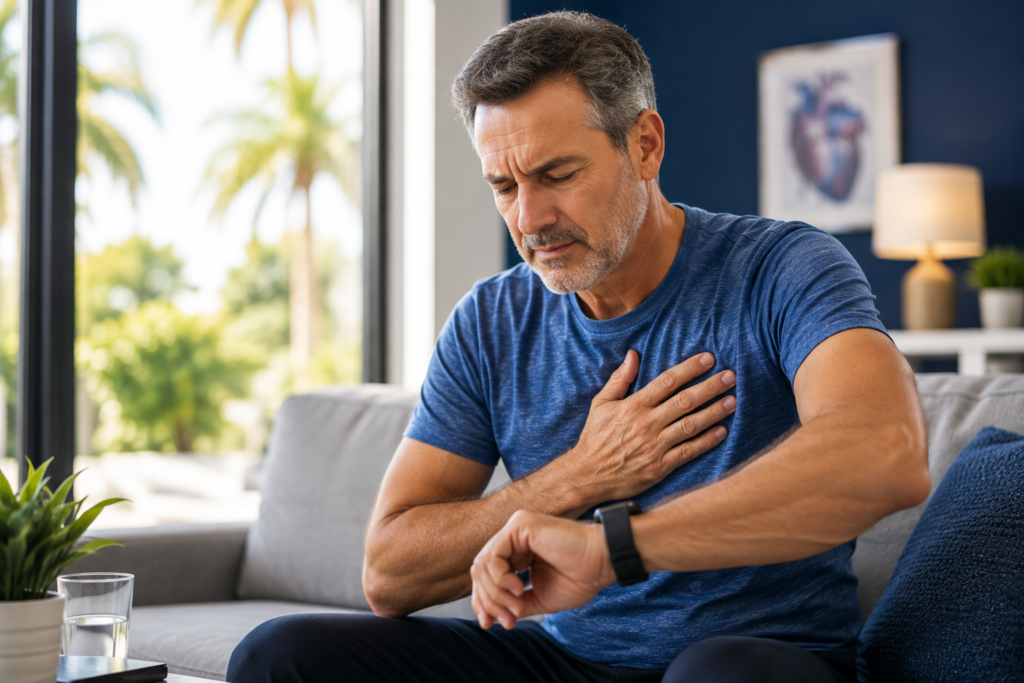
Chest pain doesn’t always feel dramatic. Many patients describe a squeezing, tightness, or heaviness rather than sharp pain, often triggered by activity like walking or climbing stairs and eased by rest. This pattern, known medically as angina, happens when your heart muscle isn’t getting enough oxygen-rich blood, usually because plaque has narrowed a coronary artery. It’s one of the clearest signs of heart problems and deserves a same-day evaluation.
2. Shortness of Breath
Feeling winded during a task that used to be easy climbing stairs, carrying groceries, mowing the lawn can signal that your heart is struggling to keep up. Shortness of breath, especially when it’s new or gradually worsens over days or weeks, is a common early sign of heart failure or coronary artery disease. It can also show up as trouble breathing while lying flat at night.
3. Extreme Fatigue
Fatigue that doesn’t improve with rest is easy to blame on age, Florida heat, or a bad night’s sleep. But unexplained exhaustion, particularly in women, can be one of the earliest heart symptoms after age 40. When your heart isn’t pumping efficiently, your muscles and organs don’t get the oxygen they need, and everyday tasks start to feel harder than they should.
4. Pain That Spreads to the Arm, Jaw, Neck, or Back
Heart-related pain doesn’t always stay in the chest. It can radiate to the left arm, jaw, neck, or upper back, sometimes without much chest discomfort at all. This spreading pattern is a classic warning sign of a heart attack and should never be ignored, especially if it comes on suddenly or with sweating.
5. Irregular Heartbeat
A fluttering, racing, or skipping sensation in your chest may point to an arrhythmia, including atrial fibrillation, commonly called AFib. AFib raises your risk of stroke and can develop gradually, often going unnoticed for months. Because it can come and go, dedicated electrophysiology testing and cardiac monitoring are often needed to see exactly what your heart rhythm is doing over time.
6. Dizziness or Fainting
Sudden dizziness, lightheadedness, or fainting can result from your heart not pumping enough blood to your brain, sometimes due to an arrhythmia, a blockage, or a sudden drop in blood pressure. These episodes deserve prompt medical attention, particularly if they happen more than once or come with chest discomfort.
7. Swelling in the Legs or Feet
Swelling around your ankles and feet, especially if it worsens by the end of the day, often points to poor circulation or fluid buildup related to heart failure. When the heart can’t pump efficiently, fluid backs up in the veins of the legs. Vascular studies can help identify whether the cause is cardiac, venous, or something else entirely.
8. Cold Sweats or Nausea
Breaking out in a cold sweat or feeling nauseated without an obvious reason can be a heart symptom, especially in women. These signs are frequently mistaken for stomach trouble or a passing bug and dismissed until they happen again. When they show up alongside chest pressure or shortness of breath, they’re a strong signal to get checked right away.
9. High Blood Pressure That Doesn't Improve
Blood pressure that stays elevated despite medication or lifestyle changes puts constant strain on your arteries and heart muscle. Over time, that strain thickens the heart wall and accelerates plaque buildup. Ongoing high blood pressure is one of the biggest drivers of coronary artery disease, heart failure, and stroke, which is why it needs regular monitoring rather than a one-time reading.
10. Leg Pain While Walking
Cramping or aching in your calves or thighs that shows up while walking and eases with rest may be peripheral artery disease, or PAD, caused by plaque narrowing the blood vessels that supply your legs. PAD is closely linked to coronary artery disease, since plaque rarely narrows just one set of blood vessels. Stress testing and vascular screening can confirm whether PAD is behind your symptoms.
Signs of Heart Problems in Women
Women often experience heart disease differently than men, and their symptoms are more likely to be dismissed as something else. Watch for jaw pain, ongoing fatigue, changes in sleep, back pain, or indigestion-like discomfort with no obvious cause. These signs are subtler than classic chest pain and are commonly mistaken for stress, acid reflux, or normal aging.
Signs of Heart Problems in Men
Men more often report the classic symptoms most people associate with heart trouble: chest pain, pain radiating down the arm, heavy sweating, and shortness of breath. Because these signs feel more obvious, men sometimes wait too long anyway, hoping the discomfort will pass or blaming it on overexertion. Obesity, smoking, diabetes, and high cholesterol all raise the risk further.
When Should You See a Cardiologist?
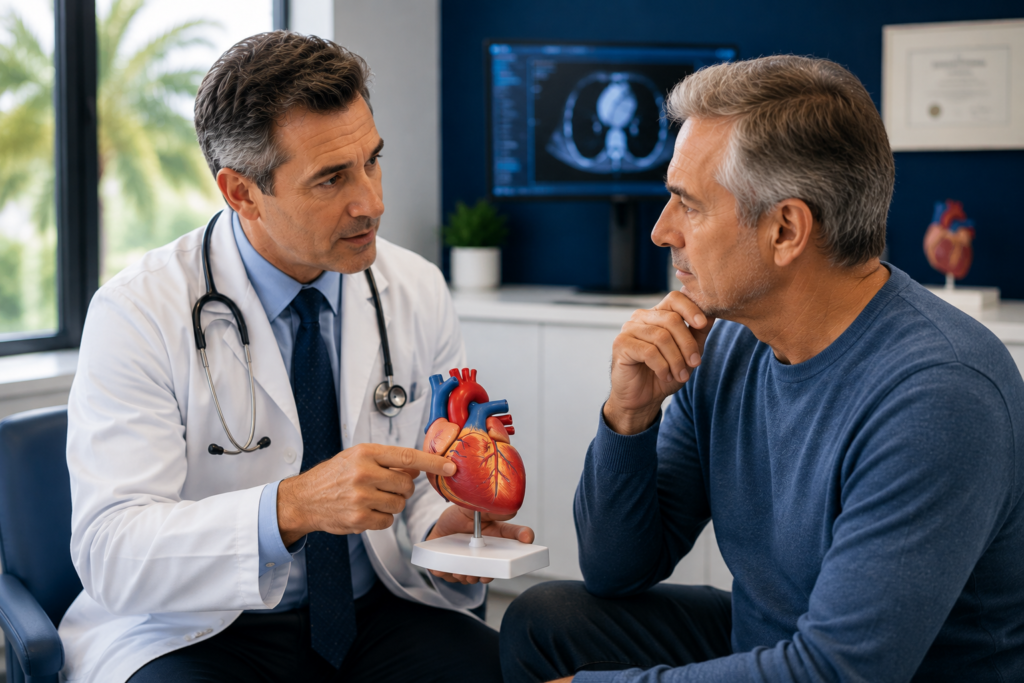
If you’re over 40 and have a family history of heart disease, smoke, or manage diabetes or high cholesterol, a heart screening is worth scheduling even without symptoms. These risk factors quietly raise your odds of coronary artery disease long before any warning sign appears. Cardiac imaging and cardiac monitoring can catch problems long before they become emergencies, giving you time to make lifestyle changes or start treatment while your options are still simple. According to the American Heart Association, early diagnosis paired with consistent lifestyle changes meaningfully lowers your risk of a future cardiac event.
Your Next Step
Heart disease is easier to manage the earlier it’s found, and most of these signs are easy to overlook until they’ve been happening for a while. If any of these symptoms sound familiar, don’t wait for them to worsen or explain them away. Schedule an evaluation with Florida Heart & Vascular Institute and get clear answers from a board-certified cardiologist who takes the time to listen and build a plan around your health.
If you’re experiencing sudden, severe chest pain, pressure, or other emergency symptoms, call 911 immediately. This article is for educational purposes and isn’t a substitute for professional medical evaluation.