
What to Do If Someone Has a Heart Attack
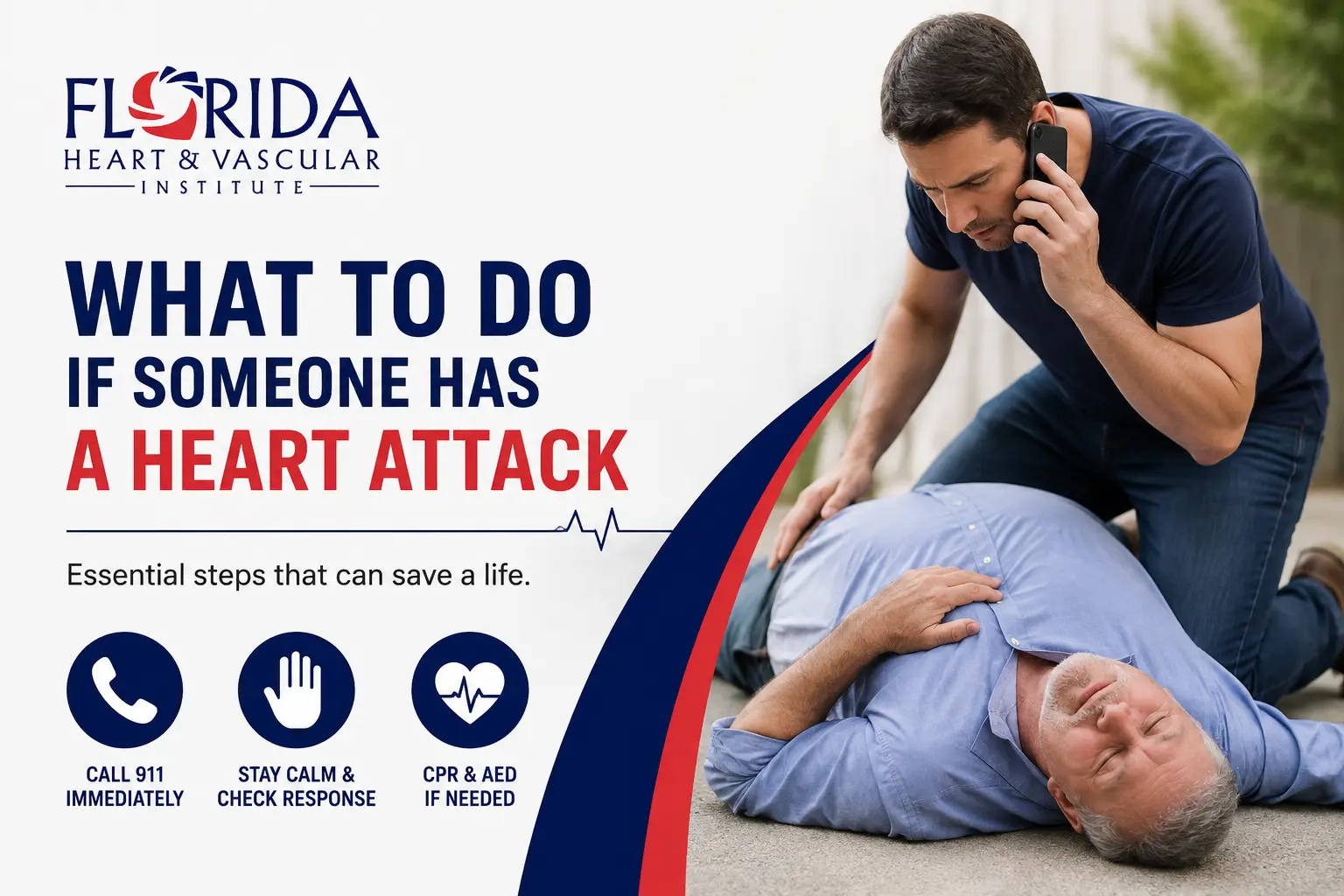
If you think someone near you is having a heart attack, call 911 immediately. Do not wait to see if the symptoms pass, do not try to drive them to the hospital yourself, and do not search online for more information before calling. Every minute without treatment can allow more damage to the heart muscle. While you wait for emergency responders, keep the person calm, help them sit or lie down in a comfortable position, and stay on the line with the 911 dispatcher, who can walk you through exactly what to do next.
The steps below explain, in order, what to do if someone has a heart attack, how to recognize the warning signs, and what to do if the person becomes unresponsive.
What to Do Immediately
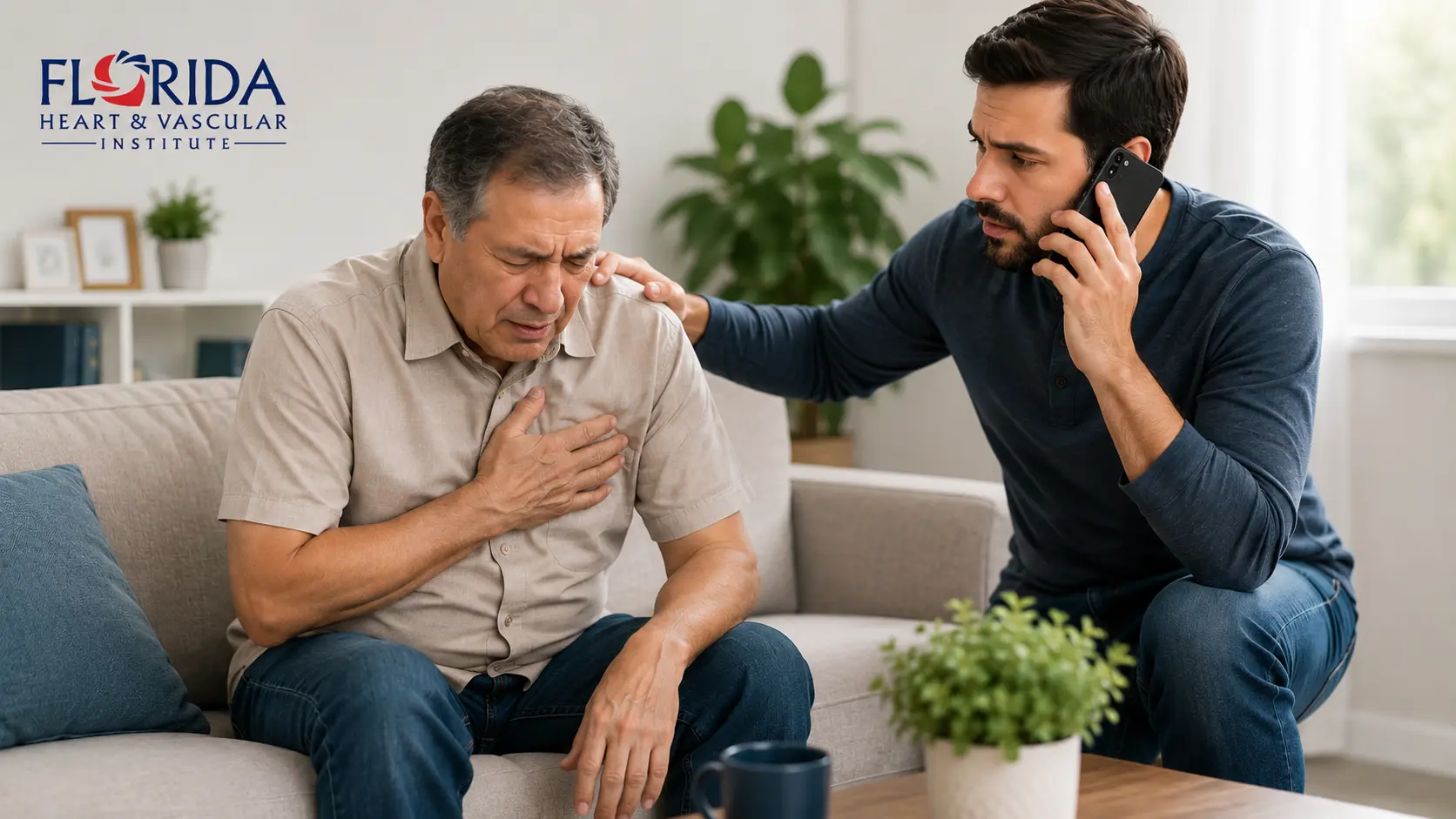
- Recognize the possible warning signs. Chest pain, pressure, or squeezing, shortness of breath, sweating, or discomfort spreading to the arm or jaw are all signs to take seriously.
- Call 911 right away. Do not delay. Say clearly that you suspect a heart attack and give your location.
- Keep the person calm and resting. Help them sit or lie down in a position that’s comfortable, usually with their head and shoulders slightly elevated.
- Loosen tight clothing around the neck and chest so they can breathe more easily.
- Stay on the phone with the dispatcher. They may give you specific instructions based on the person’s condition.
- Do not leave the person alone, except briefly to grab a phone or unlock a door for responders.
- If the person becomes unresponsive and is not breathing normally, begin CPR right away and use an AED if one is available.
- Do not try home remedies or wait to see if symptoms improve. Emergency medical care is the only appropriate response to suspected heart attack symptoms.
Common Heart Attack Warning Signs
Heart attack symptoms can vary quite a bit from person to person, and they don’t always look like what you’d expect from television. Here are the signs to watch for:
- Chest pressure, squeezing, fullness, or pain that lasts more than a few minutes or comes and goes
- Pain or discomfort that spreads to one or both arms, the shoulder, back, neck, jaw, or upper abdomen
- Shortness of breath, with or without chest discomfort
- Cold sweats
- Nausea or vomiting
- Dizziness or lightheadedness
- Unusual fatigue or weakness, sometimes appearing hours or even days before other symptoms
It’s important to know that symptoms can differ between individuals. Women, older adults, and people with diabetes are more likely to experience less typical symptoms, such as fatigue, indigestion-like discomfort, or back pain, without the classic crushing chest pain. If something feels wrong and out of the ordinary, treat it seriously rather than waiting for a “textbook” symptom to appear.
First Aid During a Heart Attack
While waiting for emergency responders, there are a few simple things a bystander can do to help, and just as importantly, a few things to avoid.
Do:
- Help the person into a comfortable resting position, usually sitting up or semi-reclined
- Keep them calm and reassure them that help is on the way
- Loosen tight clothing around the neck and waist
- Ask if they have any known heart conditions or medications, and share that information with 911 dispatchers or arriving paramedics
- Monitor their breathing and level of alertness until help arrives
Don’t:
- Don’t leave the person unattended for more than a few seconds
- Don’t give them food or drink
- Don’t assume the symptoms will pass on their own
- Don’t encourage them to walk around, climb stairs, or exert themselves in any way
First aid during a heart attack isn’t about performing complex medical procedures. It’s about keeping the person calm, safe, and monitored until trained responders arrive with the equipment and medications needed to treat a cardiac emergency.
How to Help Someone Having a Heart Attack
If you’re trying to figure out how to help someone having a heart attack, the most useful thing you can do is stay calm yourself. Panicking makes it harder to give clear information to 911 and harder to reassure the person who’s struggling.
Here’s how to be genuinely helpful in the moment:
- Speak in a steady, calm voice. Fear and anxiety can worsen chest pain and shortness of breath.
- Give the dispatcher clear details, including the person’s approximate age, symptoms, and whether they’re conscious and breathing.
- If you know CPR, be ready to use it if the person loses consciousness and stops breathing normally.
- If others are nearby, delegate tasks. Have one person call 911 while another unlocks doors or brings an AED, if one is available in the building.
- Stay with the person until paramedics arrive and can take over care.
What Not to Do During a Suspected Heart Attack
Certain instincts, like trying to “wait it out” or handle things yourself, can cost valuable time during a cardiac emergency. Avoid the following:
- Don’t wait to see if symptoms disappear. Heart attack symptoms can fluctuate, but that doesn’t mean the danger has passed.
- Don’t drive the person to the hospital yourself if emergency medical services are available. Paramedics can begin treatment on the way and are equipped to respond if the person’s condition worsens en route.
- Don’t let the person walk around or exert themselves. Physical activity increases the heart’s oxygen demand at the worst possible time.
- Don’t give food or drink unnecessarily.
- Don’t delay calling 911 while searching online for symptoms or possible treatments. Time matters more than research in this situation.
- Don’t offer medication advice beyond what a 911 dispatcher instructs. Some dispatchers may advise a conscious adult to chew an aspirin if there’s no known allergy or contraindication, but this guidance should always come from emergency medical professionals based on the specific situation, not from a bystander’s own judgment.
What to Do If the Person Becomes Unresponsive
If the person loses consciousness, quick action matters. Here’s the simplified sequence to follow:
- Check for responsiveness. Tap their shoulder and ask loudly if they’re okay.
- Check for normal breathing. Look and listen for about 10 seconds.
- Call 911 immediately, or have someone else call while you begin care.
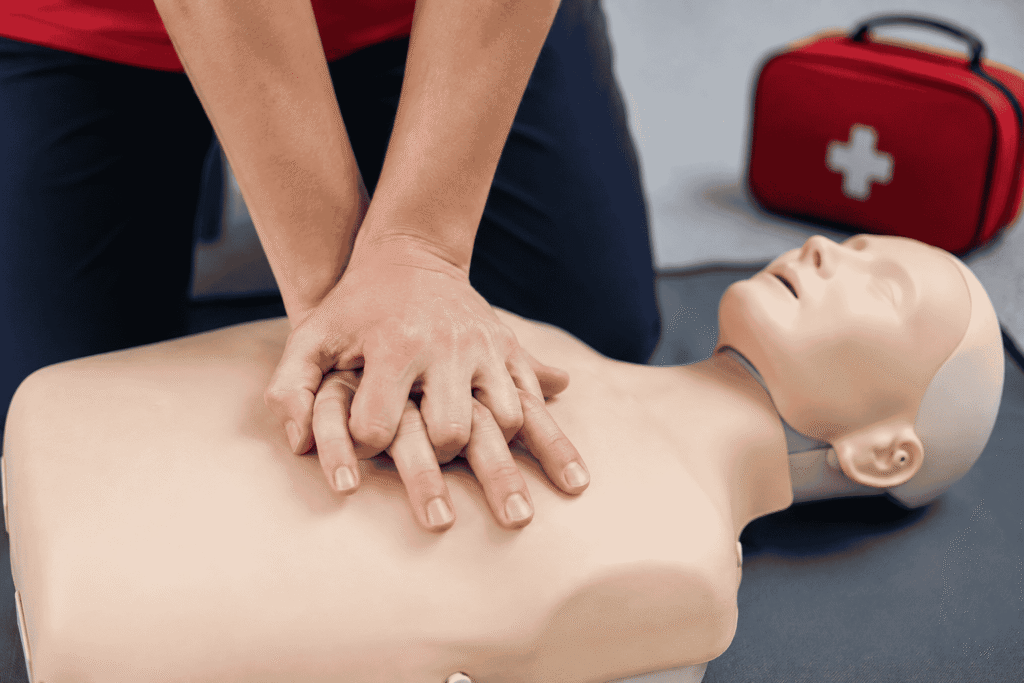
- If they are not breathing normally, begin CPR. Push hard and fast in the center of the chest, aiming for about 100 to 120 compressions per minute.
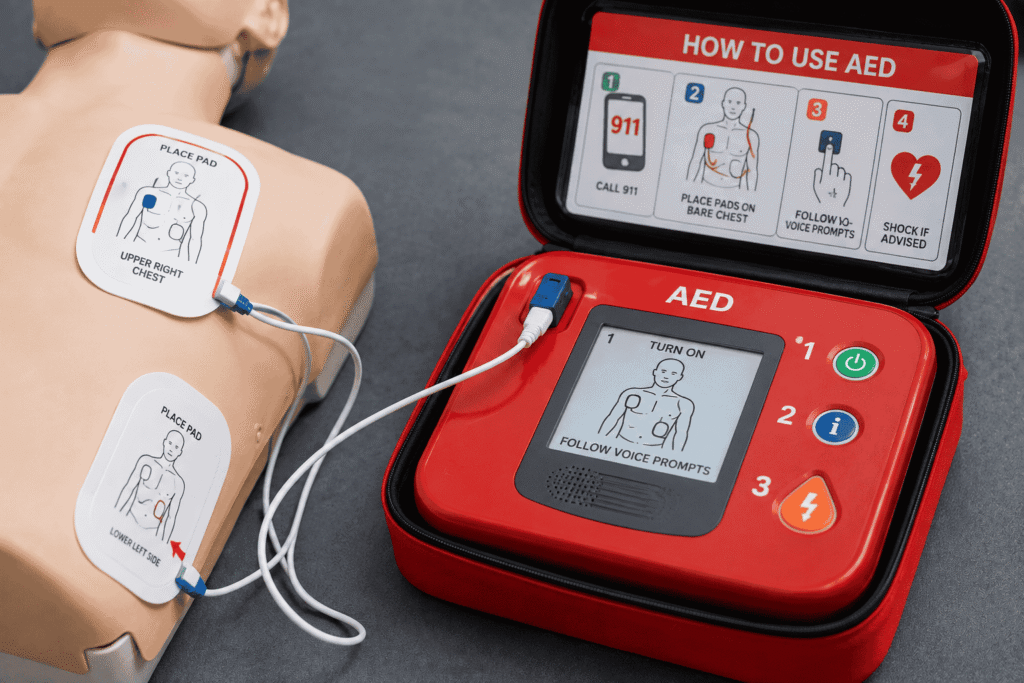
- Use an AED if one is available. Turn it on and follow its voice prompts; the device will guide you through placement and whether a shock is needed.
- Continue CPR until paramedics arrive or the person begins breathing normally on their own.
This can feel overwhelming under stress, but AEDs are designed for use by untrained bystanders and will walk you through each step out loud. For a refresher on proper technique, the American Heart Association offers free guidance on hands-only CPR that anyone can learn. The most important actions are calling 911 and starting compressions without delay.
Can You Prevent a Heart Attack From Becoming Worse?
Once a heart attack begins, rapid emergency treatment gives the person the best chance at limiting damage to the heart muscle. Paramedics can begin evaluation and treatment before arrival at the hospital, and hospital teams are prepared to act quickly once the person arrives. This is why calling 911 immediately, rather than waiting or arranging your own transportation, matters so much: professional responders are equipped to monitor and treat complications that can develop in the minutes after a heart attack begins.
There’s no way to guarantee an outcome once a heart attack is underway, but getting the person into professional medical care as fast as possible is the single most important action a bystander can take.
What Happens After Emergency Care?
Once the person arrives at the hospital, the medical team will typically perform an evaluation that includes an EKG, blood tests to check for markers of heart damage, and other diagnostic imaging. Depending on what they find, treatment may involve medications, a procedure to open a blocked artery, or close monitoring in a cardiac unit. Every case is different, and only the treating medical team can determine the right path forward for a specific patient.
After the immediate emergency has passed, many patients are referred for follow-up cardiovascular evaluation to understand what caused the event and to reduce the risk of it happening again. This is where ongoing care with a cardiologist becomes important, including cardiac imaging to assess the heart’s structure and function, stress testing to see how the heart performs under exertion, and cardiac monitoring to watch for irregular heart rhythms during recovery.
When Should You Call 911?
Any time you suspect someone is having a heart attack, that’s the moment to call 911. Don’t wait for symptoms to become unbearable, and don’t wait to see if they improve. Chest pain or pressure that lasts more than a few minutes, especially combined with shortness of breath, sweating, nausea, or pain spreading to the arm or jaw, is a cardiac emergency that requires immediate attention. This is true whether the person has a known history of heart disease or has never had a cardiac issue before.
If you or someone near you is managing ongoing risk factors like high blood pressure, high cholesterol, diabetes, or a family history of coronary artery disease, it’s worth discussing your personal risk with a cardiologist through preventive cardiology and evaluation services, separate from any emergency situation.
Frequently Asked Questions
What should I do if I think someone is having a heart attack?
Call 911 immediately, help the person into a comfortable resting position, and stay with them until paramedics arrive. Do not attempt to drive them to the hospital yourself if emergency services are available.
Can a person having a heart attack take aspirin?
In some cases, a 911 dispatcher may advise a conscious adult with no known allergies or bleeding conditions to chew an aspirin while waiting for help. This decision should be guided by the dispatcher or emergency medical personnel, not decided independently by a bystander.
Should you drive someone having a heart attack to the hospital?
No, not if emergency medical services are available. Paramedics can begin treatment en route and are equipped to handle complications that may develop, which isn’t possible in a personal vehicle.
What should you do if someone becomes unconscious during a heart attack?
Check for responsiveness and normal breathing, call 911 if you haven’t already, and begin CPR if the person isn’t breathing normally. Use an AED if one is available.
How can you tell if chest pain may be a heart attack?
Chest pain from a heart attack often feels like pressure, squeezing, or fullness rather than a sharp, stabbing pain, and it may spread to the arm, jaw, neck, or back. It can also come with shortness of breath, sweating, or nausea. Any concerning or unexplained chest pain deserves prompt medical attention.
Can a heart attack happen without severe chest pain?
Yes. Some people, particularly women, older adults, and people with diabetes, experience heart attacks with mild or no chest pain, presenting instead with fatigue, shortness of breath, or discomfort in the back, jaw, or abdomen.
What should you do while waiting for an ambulance?
Keep the person calm and resting, loosen tight clothing, monitor their breathing, and stay on the line with the 911 dispatcher for further instructions. Avoid giving food, drink, or unnecessary medication.
Is it normal to feel unsure about what’s happening during a possible heart attack?
Yes, and that uncertainty is exactly why calling 911 is the right move even if you’re not completely sure. Dispatchers and paramedics are trained to evaluate the situation quickly, so you don’t have to make that judgment call alone.
The Bottom Line
Recognizing a possible heart attack and calling 911 without delay gives someone the best chance at getting the emergency treatment they need. Staying calm, keeping the person resting, and following the dispatcher’s instructions are the most valuable things a bystander can do in the moment.
Once the emergency has passed, understanding what led to the event matters too. Florida Heart & Vascular Institute provides board-certified cardiology evaluation across Florida, including interventional cardiology for blocked arteries, electrophysiology for irregular heart rhythms, and vascular studies for circulation concerns that often accompany heart disease. If you’ve experienced a cardiac event or have risk factors that concern you, our team, supported by our on-site cardiovascular cath lab, is available for follow-up evaluation and ongoing care. For suspected heart attack symptoms right now, always call 911 first.
This article is for educational purposes only and does not replace emergency medical care. If you or someone near you is experiencing symptoms of a heart attack, Call 911 immediately.