What Is Cardiac Monitoring?

Cardiac monitoring records the electrical activity of the heart over time to help identify rhythm abnormalities that may not appear during a standard office electrocardiogram.

Some rhythm problems occur only occasionally. A patient may experience palpitations, dizziness, fainting, shortness of breath, or an irregular heartbeat even though a brief EKG appears normal.

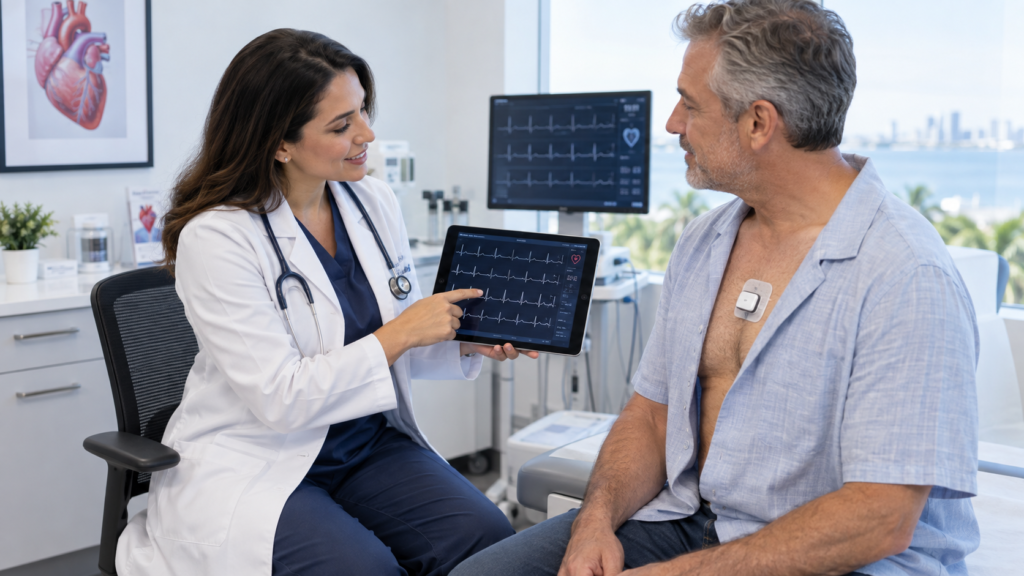
Cardiologist reviewing heart rhythm monitoring results with a patient wearing a cardiac monitor

At Florida Heart & Vascular Institute, cardiac monitoring may include Holter monitoring or longer-term monitoring with an implantable loop recorder, depending on how often symptoms occur and the type of rhythm problem being investigated.

The goal is to collect useful rhythm information that can help your cardiovascular care team better understand your symptoms and determine the appropriate next step.

Heart Rhythm Problems Cardiac Monitoring May Help Evaluate

Palpitations

Palpitations may feel like fluttering, pounding, racing, skipped beats, or an irregular heartbeat. Because these symptoms can occur intermittently, longer-term monitoring may help determine whether they are associated with an abnormal heart rhythm.

Unexplained Dizziness

Dizziness or lightheadedness can have many causes, but in some patients it may be associated with changes in heart rate or rhythm. Cardiac monitoring can help determine whether a rhythm abnormality occurs around the time symptoms are experienced.

Fainting or Near-Fainting

Unexplained fainting or near-fainting may sometimes be related to an abnormal heart rhythm. When symptoms are infrequent or difficult to capture during routine testing, longer-term rhythm monitoring may be considered.

Irregular Heartbeat

Patients with suspected or known arrhythmias may need monitoring to evaluate heart rate patterns, rhythm changes, or how frequently an abnormal rhythm occurs.

Slow Heart Rate

A slow heart rate may be normal in some people, but it may also be associated with conduction problems or symptoms such as fatigue, weakness, dizziness, or fainting. Monitoring can help determine whether clinically significant bradycardia is present.

Fast Heart Rate

Episodes of a rapid heartbeat may occur suddenly and resolve before an office EKG can capture them. Ambulatory monitoring may help document these episodes and provide information about the type of rhythm involved.

When You May Need Cardiac Monitoring

Cardiac monitoring may be recommended when symptoms suggest a possible heart rhythm abnormality, but the problem is not consistently present during a routine examination or standard EKG.

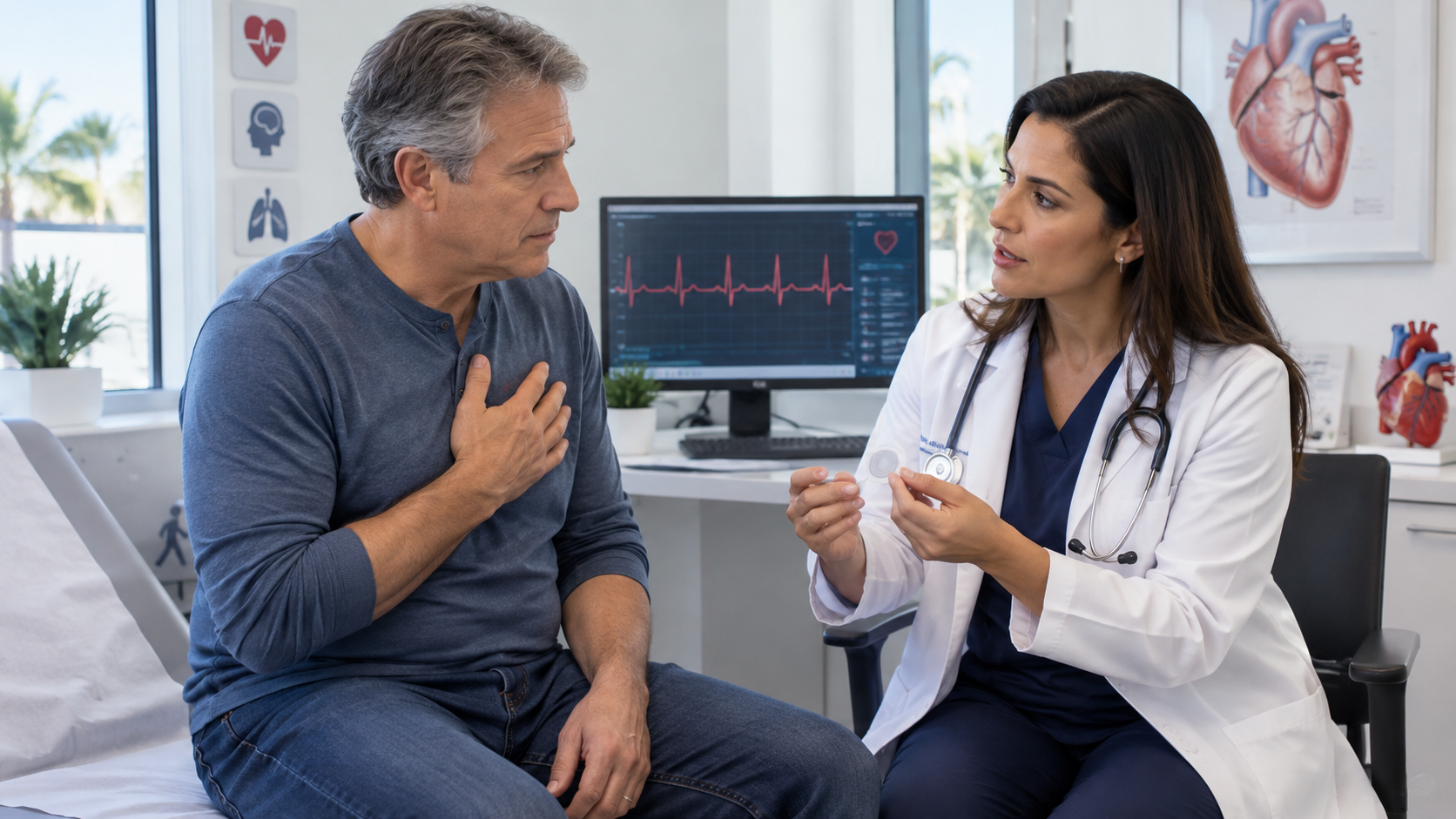
Patient discussing palpitations and heart rhythm symptoms with a cardiologist

Cardiac Monitoring May Be Considered If You Have:

  • Recurrent palpitations
  • A racing or irregular heartbeat
  • Unexplained dizziness or lightheadedness
  • Fainting or near-fainting
  • Unexplained episodes of weakness
  • Intermittent shortness of breath
  • Symptoms that occur unpredictably
  • A known arrhythmia requiring additional evaluation
  • An abnormal EKG that needs further investigation
  • Symptoms that were not captured during previous short-term testing

Monitoring May Also Be Used To:

  • Evaluate how frequently an arrhythmia occurs
  • Correlate symptoms with heart rhythm changes
  • Detect intermittent abnormalities not seen on a routine EKG
  • Monitor selected patients with known rhythm disorders
  • Assess unexplained episodes that occur infrequently
  • Evaluate unusually fast or slow heart rates
  • Investigate recurrent fainting or near-fainting
  • Support treatment and follow-up decisions
  • Guide further electrophysiology or cardiology evaluation

Emergency Warning

Call 911 immediately for severe chest pain, severe shortness of breath, fainting with ongoing symptoms, sudden weakness or numbness, or other signs of a medical emergency.

Finding Rhythm Changes That May Be Easy to Miss

Heart rhythm symptoms can be difficult to diagnose when they occur only occasionally. FHVI evaluates the pattern of your symptoms, medical history, previous testing, and how frequently episodes occur to determine which type of monitoring may provide the most useful information.

  • Electrocardiogram (EKG/ECG) — records the heart’s electrical activity at a specific point in time and may identify rhythm or conduction abnormalities.
  • Symptom and medical history review — helps determine when symptoms occur, how long they last, and whether they may be related to heart rhythm.
  • Holter monitoring — continuously records heart rhythm over an extended period to capture abnormalities that may occur during everyday activity.
  • Longer-term rhythm monitoring — may be considered when symptoms occur less frequently and are difficult to capture with short-term monitoring.
  • Implantable loop recorder — provides extended heart rhythm monitoring for selected patients with infrequent or unexplained symptoms.
  • Cardiac imaging or laboratory testing — may be used when additional evaluation is needed to identify other cardiovascular factors that could contribute to symptoms.
  • Electrophysiology evaluation — may be recommended when monitoring identifies or strongly suggests an abnormal heart rhythm that requires specialized rhythm care.
Choosing the Right Monitoring Approach

The Best Monitor Depends on How Often Symptoms Occur

Not every patient needs the same type of cardiac monitor. The most appropriate option depends on the frequency of symptoms, the suspected rhythm problem, previous test results, and the amount of monitoring time needed to capture useful information.

Standard EKG

Best suited for rhythm abnormalities that are present at the time of the office evaluation.

Holter Monitoring

May be appropriate when symptoms or rhythm abnormalities occur frequently enough to be captured during continuous short-term monitoring.

Extended External Monitoring

May be considered when symptoms occur less frequently and additional monitoring time is needed.

Implantable Loop Recorder

May be considered for selected patients with infrequent, unexplained symptoms that are difficult to capture with external monitoring.

Specialist Evaluation

If monitoring identifies a significant rhythm abnormality, your care team may recommend further evaluation by a cardiac electrophysiology specialist.

Benefits and Considerations of Cardiac Monitoring

Cardiac monitoring is designed to record heart rhythm information during everyday life and help connect symptoms with electrical activity. The benefits and considerations depend on the type of monitor used and each patient’s clinical needs.

Potential Benefits

Considerations

Having Palpitations, Dizziness, or an Irregular Heartbeat?

If your symptoms come and go, cardiac monitoring may help your care team capture important rhythm information and determine whether further evaluation is needed.

Heart Rhythm Monitoring

Cardiac Monitoring Services

FHVI provides heart rhythm monitoring to help identify intermittent electrical abnormalities, evaluate unexplained symptoms, and guide ongoing cardiovascular care. The type and duration of monitoring are selected based on each patient’s symptoms, previous testing, and clinical needs.

Core Cardiac Monitoring

These monitoring options are used to record the heart’s electrical activity over time and help identify rhythm abnormalities that may not appear during a brief office EKG.
Holter monitor for continuous heart rhythm recording

Holter Monitoring

Continuous Monitoring

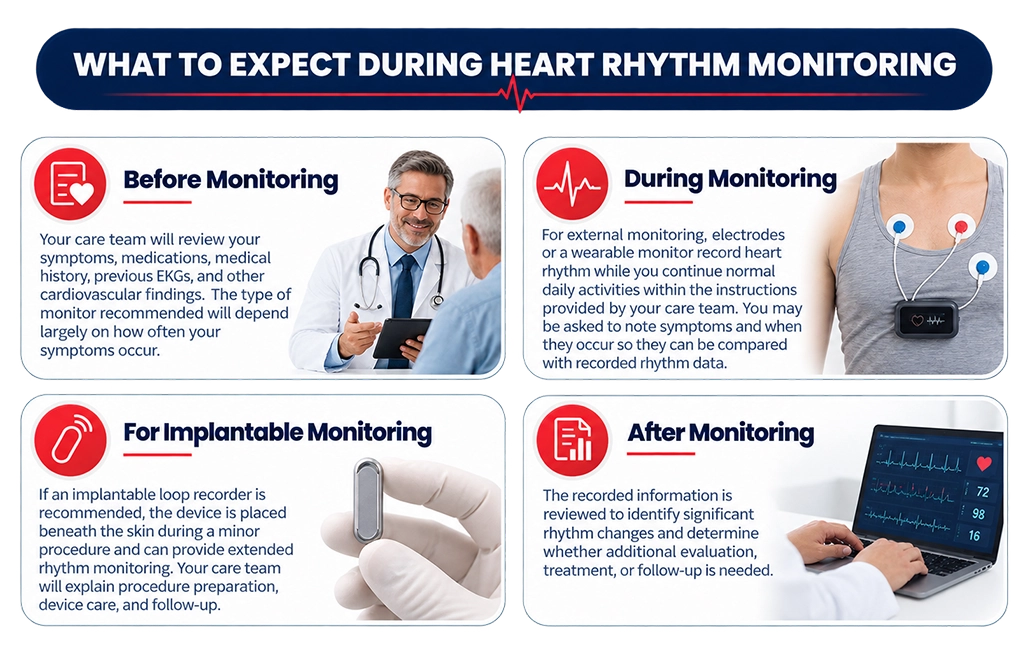
Holter monitoring uses a portable device to continuously record the heart’s electrical activity during normal daily activities. It may help identify rhythm abnormalities associated with palpitations, dizziness, irregular heartbeats, or other recurring symptoms.

Heart Rhythm Noninvasive Continuous Recording
Implantable loop recorder for long-term heart rhythm monitoring

Implantable Loop Recorder

Long-Term Monitoring

An implantable loop recorder is a small device placed beneath the skin to provide extended heart rhythm monitoring. It may be considered for selected patients with infrequent or unexplained symptoms that have not been captured with shorter-term monitoring.

Long-Term Monitoring Intermittent Symptoms Heart Rhythm

Additional Rhythm Monitoring

Longer or more specialized external monitoring may be considered when symptoms occur less predictably or when additional rhythm information is needed.

Cardiac event monitor for intermittent heart rhythm symptoms

Event Monitoring

Extended Monitoring

Event monitoring records heart rhythm information over a longer period and may be useful when symptoms such as palpitations, dizziness, or irregular heartbeats occur intermittently rather than every day.

Intermittent Symptoms Extended Recording Heart Rhythm
Mobile cardiac telemetry for heart rhythm monitoring

Mobile Cardiac Telemetry

Remote Rhythm Monitoring

Mobile cardiac telemetry is a wearable monitoring approach that can record heart rhythm during daily activity and transmit selected rhythm information for review. It may be considered when more continuous external rhythm surveillance is clinically appropriate.

Remote Monitoring Wearable Device Rhythm Evaluation
Ambulatory ECG monitoring during daily activity

Ambulatory ECG Monitoring

Ambulatory Testing

Ambulatory ECG monitoring records the heart’s electrical activity while a patient continues normal daily activities. Different devices and monitoring durations may be used depending on how frequently symptoms occur.

ECG Recording Daily Activity Arrhythmia Detection

Related Rhythm Evaluation & Device Follow-Up

Rhythm monitoring is often part of a broader care pathway that may include diagnostic testing, implanted-device follow-up, and specialized electrophysiology evaluation.
Electrocardiogram EKG for heart rhythm evaluation

Electrocardiogram (EKG)

Initial Rhythm Testing

An electrocardiogram records the heart’s electrical activity during a brief office test and is often one of the first evaluations used when a possible rhythm abnormality is suspected.

Electrical Activity Heart Rhythm Noninvasive
Pacemaker monitoring and device follow-up

Pacemaker Monitoring & Device Checks

Device Follow-Up

Pacemaker follow-up may include evaluation of device function, battery status, stored rhythm information, and programming when clinically appropriate. Ongoing monitoring helps support safe and effective device management.

Pacemaker Device Check Rhythm Follow-Up
ICD and CRT cardiac device monitoring

ICD & CRT Device Monitoring

Advanced Device Care

Patients with implantable cardiac devices such as an ICD or CRT system may require ongoing device monitoring to assess function, battery status, stored rhythm events, and other device-related information.

ICD CRT Device Monitoring
Cardiac electrophysiology evaluation for abnormal heart rhythms

Cardiac Electrophysiology Evaluation

Specialized Rhythm Care

When monitoring identifies or strongly suggests a significant rhythm abnormality, patients may be referred for specialized electrophysiology evaluation. Additional testing or treatment may be recommended based on the rhythm identified, symptoms, and overall cardiovascular health.

Arrhythmia Care Heart Rhythm Specialist Advanced Evaluation
Important: Holter monitoring and implantable loop recorder are part of FHVI’s verified Cardiac Monitoring service mapping. Availability of additional external monitors, telemetry, implanted-device monitoring, and related services should be confirmed before publication. The appropriate type and duration of monitoring depend on the patient’s symptoms, medical history, previous testing, and suspected rhythm condition.
Cardiac Monitoring
Meet Your Cardiac Monitoring Team

Experienced Providers for Heart Rhythm Evaluation

FHVI physicians and advanced practice providers use rhythm monitoring alongside symptoms, medical history, and other cardiovascular testing to evaluate possible arrhythmias and guide appropriate follow-up care. When specialized rhythm treatment is needed, patients can be connected with FHVI’s cardiac electrophysiology services.

Dr. Asad Qamar, MD

Interventional Cardiologist

Claudio F. Manubens, MD

Interventional Cardiologist

Dr. Oji Joseph, MD

Invasive Cardiologist

Syed Imran Ali, MD

Interventional Cardiologist

Jeveria Ali, DNP

Adult-Gerontology Acute Care NP

Cardiac Monitoring Across Florida

Find an FHVI Cardiac Monitoring Location Near You

FHVI provides cardiac monitoring at select Florida locations. Monitor type, provider availability, and follow-up services may vary, so our scheduling team can help connect you with the appropriate location for your care.

Request Your Appointment

Complete the form below with your preferred cardiologist, location, and reason for visit. An FHVI team member will contact you to confirm availability and next steps.


    0/1000

    By submitting this form, you agree to our Privacy Policy. This form is for non-urgent inquiries only. For medical emergencies, please call 911.

    Why Choose FHVI

    Trusted Cardiovascular Care Since 1997

    Since 1997, Florida Heart & Vascular Institute has provided physician-led cardiovascular care with a focus on clinical expertise, advanced technology, clear communication, and individualized treatment. Our team works to make every step of the patient journey—from evaluation and diagnosis to treatment and follow-up—more coordinated and understandable.

    Serving Patients Since 1997

    Decades of cardiovascular care experience have shaped a patient-first approach focused on quality, continuity, and trust.

    Physician-Led Cardiovascular Care

    Our physicians stay closely involved in evaluation, treatment planning, and follow-up.

    Advanced Diagnostic Technology

    Modern cardiac and vascular testing supports accurate evaluation and informed care decisions.

    Personalized Treatment Plans

    Care recommendations are based on each patient’s symptoms, medical history, diagnostic findings, and individual needs.

    Minimally Invasive Care Options

    When appropriate, FHVI offers catheter-based and other minimally invasive treatment options for selected cardiovascular conditions.

    Coordinated Care Across Florida

    Multiple FHVI locations help patients access cardiovascular evaluation, testing, treatment, and follow-up closer to home.

    Frequently Asked Questions

    Cardiac monitoring records the electrical activity of the heart over time to help identify intermittent rhythm abnormalities and determine whether symptoms are associated with changes in heart rhythm.

    A monitor may be recommended if you experience palpitations, dizziness, fainting, irregular heartbeats, or other symptoms that may not occur during a standard EKG.

    A Holter monitor is a portable device that continuously records heart rhythm while you carry out normal daily activities.

    An implantable loop recorder is a small device placed beneath the skin to provide long-term heart rhythm monitoring. It may be useful when symptoms occur infrequently.

    External cardiac monitoring is noninvasive, although electrode patches may cause mild skin irritation. Implantable loop recorders require a small procedure, and your care team will explain what to expect.

    Many patients can continue most normal activities, but specific restrictions depend on the device being used. Follow the instructions provided by your care team.

    Follow the instructions provided with your monitor. Some devices allow you to mark or record when symptoms occur so the care team can compare the event with your heart rhythm.

    Your cardiovascular provider will review the findings along with your symptoms and medical history. Depending on the result, additional testing, medication changes, electrophysiology evaluation, or other treatment may be considered.

    The length of monitoring varies based on how frequently symptoms occur and the type of rhythm abnormality being investigated.

    Cardiac monitoring may help detect atrial fibrillation and other rhythm abnormalities when they occur during the monitoring period.

    Coverage depends on the type of monitor, medical necessity, insurance plan, and authorization requirements. Patients should verify benefits with FHVI or their insurance provider.