

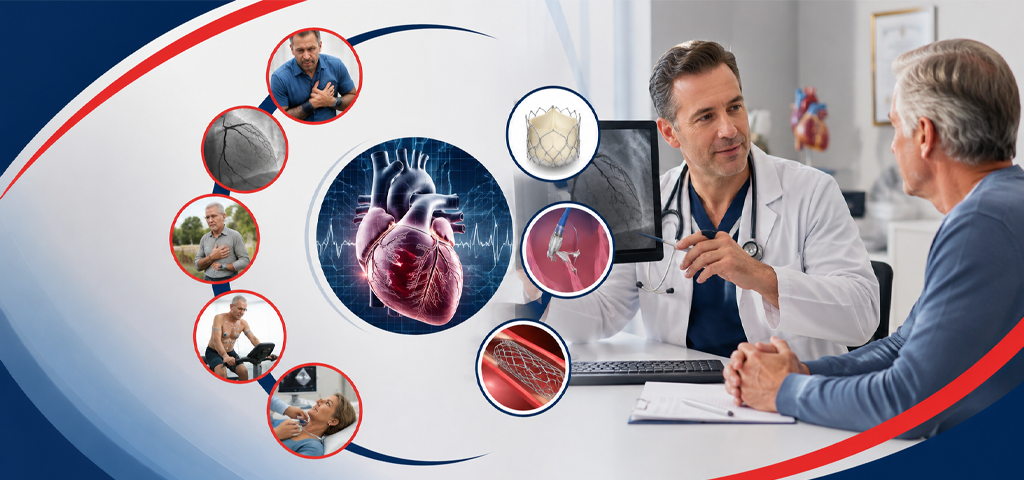
What Is Interventional Cardiology?
Interventional cardiology is a specialized area of cardiovascular medicine that uses minimally invasive, catheter-based procedures to diagnose and treat certain heart and blood vessel conditions. Instead of traditional open surgery, a thin catheter may be guided through a blood vessel, commonly from the wrist or groin, to evaluate circulation, identify narrowing or blockages, and provide treatment when appropriate.
At FHVI, interventional cardiology care may include cardiac catheterization, coronary stenting, peripheral angioplasty, and atherectomy, depending on the patient’s symptoms, diagnostic findings, vascular anatomy, and overall health.
Coronary Intervention
Cardiac catheterization helps evaluate the coronary arteries and identify narrowing or blockages that may be affecting blood flow to the heart. When appropriate, coronary angioplasty and stenting may be used to open a narrowed coronary artery and help restore blood flow. Whether treatment is performed during the same procedure depends on the patient’s findings, clinical condition, and treatment plan.
Structural Heart Procedures
Some patients with valve disease or other structural heart conditions may benefit from minimally invasive catheter-based treatment. FHVI offers selected structural heart procedures, including TAVR and MitraClip / transcatheter edge-to-edge repair (TEER), based on symptoms, imaging findings, heart anatomy, and overall health.
Rhythm-Related Structural Treatment
Left atrial appendage closure, including the Watchman procedure, may be considered for selected patients with atrial fibrillation who are at increased risk of stroke and may not be appropriate candidates for long-term anticoagulation. Treatment decisions are based on individual stroke risk, bleeding risk, and overall health
Congenital Defect Closure
Left atrial appendage closure, including the Watchman procedure, may be considered for selected patients with atrial fibrillation who are at increased risk of stroke and may not be appropriate candidates for long-term anticoagulation. Treatment decisions are based on individual stroke risk, bleeding risk, and overall health
Complex Coronary Lesion Treatment
Coronary atherectomy is a specialized catheter-based technique used in selected patients to modify or reduce calcified plaque within a narrowed coronary artery. It may be used to help prepare the artery for angioplasty or stent placement when clinically appropriate.
When You May Need an Interventional Cardiologist
Interventional cardiology may be recommended when symptoms, diagnostic testing, or a known cardiovascular condition suggest that blood flow to the heart or peripheral arteries may be reduced. An interventional cardiologist can review your symptoms and test results, determine whether additional evaluation, such as cardiac catheterization is appropriate, and discuss catheter-based treatment when needed.
Seek Prompt Medical Evaluation If You Have:
- Chest pain or pressure with activity that improves with rest
- New or worsening shortness of breath
- Symptoms that may suggest worsening coronary artery disease
- An abnormal or inconclusive stress test
- Known coronary artery disease with new or progressive symptoms
- Leg pain with walking or other symptoms of reduced blood flow in the limbs
- A recent test showing significant coronary or peripheral artery narrowing
Consider an Interventional Cardiology Evaluation If You Have:
- Diagnosed heart valve disease, such as aortic stenosis or mitral regurgitation
- A structural heart condition, such as a PFO or ASD
- Atrial fibrillation with stroke-risk or anticoagulation concerns
- A referral for cardiac catheterization or coronary evaluation
- A previous coronary stent or bypass surgery requiring ongoing cardiovascular follow-up
- Known peripheral arterial disease that may require catheter-based treatment
Emergency Warning
Call 911 immediately for severe or persistent chest pain, chest pressure with sweating or nausea, severe shortness of breath, fainting, or symptoms that may indicate a heart attack. Do not drive yourself to the hospital.
Understanding the Risks and Benefits of Interventional Cardiology
Benefits
- Direct Evaluation of Blood Flow: Cardiac catheterization can provide detailed information about narrowing or blockages in the coronary arteries.
- Targeted Treatment: Selected blockages may be treated with angioplasty, stenting, or other catheter-based techniques when appropriate.
- Minimally Invasive Approach: Many interventional procedures use a small vascular access point rather than a traditional surgical incision.
- Improved Circulation: Treatment may help restore blood flow through narrowed coronary or peripheral arteries.
- Individualized Care Planning: Treatment decisions are based on symptoms, imaging findings, anatomy, medical history, and overall health.
Risks
- Bleeding or Bruising: Bleeding or bruising can occur at the catheter access site.
- Contrast Reaction or Kidney Stress: Contrast material used during some procedures may cause allergic reactions or affect kidney function in susceptible patients.
- Blood Vessel Injury: Rarely, the catheter or procedure may damage a blood vessel.
- Heart Rhythm or Cardiac Complications: Some procedures may cause abnormal heart rhythms or other cardiovascular complications.
- Rare Serious Complications: Heart attack, stroke, significant bleeding, or other serious complications can occur but are uncommon and should be discussed before treatment.
Concerned About a Heart or Artery Blockage?
If you have chest discomfort, an abnormal cardiac test, known coronary artery disease, or circulation concerns, FHVI can help determine whether interventional evaluation or catheter-based treatment may be appropriate.
Catheter-Based Heart & Vascular Procedures
Cardiac Catheterization
Cardiac catheterization is a minimally invasive procedure used to evaluate blood flow through the coronary arteries and identify narrowing or blockages. Contrast imaging helps the cardiologist assess coronary artery disease and determine whether additional treatment may be appropriate.
Coronary Angioplasty & Stenting (PCI)
Peripheral Transluminal Angioplasty (PTA)
Peripheral angioplasty is a catheter-based treatment used to open selected narrowed or blocked arteries outside the heart. A balloon is positioned within the affected artery and expanded to help improve blood flow when clinically appropriate.
Coronary Atherectomy
Coronary atherectomy is a specialized catheter-based technique used in selected patients to modify or reduce calcified plaque within a narrowed coronary artery. It may help prepare the artery for angioplasty or stent placement when clinically appropriate.
Transcatheter Aortic Valve Replacement (TAVR)
MitraClip / Transcatheter Edge-to-Edge Repair (TEER)
Transcatheter edge-to-edge repair, commonly performed using MitraClip, is a minimally invasive treatment for selected patients with significant mitral valve regurgitation. The procedure uses a catheter-based device to help improve closure of the mitral valve.
Watchman / Left Atrial Appendage Closure
Left atrial appendage closure is a catheter-based treatment used in selected patients with atrial fibrillation to reduce the risk of blood clots forming in the left atrial appendage. Whether the procedure is appropriate depends on individual stroke and bleeding risk.
ASD & PFO Closure
Selected atrial septal defects (ASD) and patent foramen ovale (PFO) may be treated using a catheter-based closure device. Treatment decisions depend on the type of defect, symptoms, imaging findings, stroke history, anatomy, and overall cardiovascular health.
Experienced Providers for Catheter-Based Cardiovascular Care
Find an FHVI Interventional Cardiology Location Near You
Trusted Cardiovascular Care Since 1997
Serving Patients Since 1997
Decades of cardiovascular care experience have shaped a patient-first approach focused on quality, continuity, and trust.
Physician-Led Cardiovascular Care
Our physicians stay closely involved in evaluation, treatment planning, and follow-up.
Advanced Diagnostic Technology
Modern cardiac and vascular testing supports accurate evaluation and informed care decisions.
Personalized Treatment Plans
Care recommendations are based on each patient’s symptoms, medical history, diagnostic findings, and individual needs.
Minimally Invasive Care Options
When appropriate, FHVI offers catheter-based and other minimally invasive treatment options for selected cardiovascular conditions.
Coordinated Care Across Florida
Multiple FHVI locations help patients access cardiovascular evaluation, testing, treatment, and follow-up closer to home.
Frequently Asked Questions
Interventional cardiology is a specialized area of cardiovascular medicine that uses minimally invasive catheter-based procedures to evaluate and treat certain heart and blood vessel conditions, including coronary artery disease and selected peripheral arterial disease.
Interventional cardiologists commonly evaluate and treat coronary artery disease and narrowed or blocked arteries. Depending on the physician’s expertise and available services, interventional care may also include selected peripheral vascular or structural heart conditions.
Cardiac catheterization may be recommended when symptoms or noninvasive testing suggest a possible coronary artery blockage or when more detailed information is needed before treatment. Your cardiologist will determine whether catheterization is appropriate based on your symptoms, test results, and medical history.
Percutaneous coronary intervention, or PCI, is a catheter-based procedure used to treat selected narrowed or blocked coronary arteries. A balloon may be used to open the artery, followed by placement of a stent when appropriate.
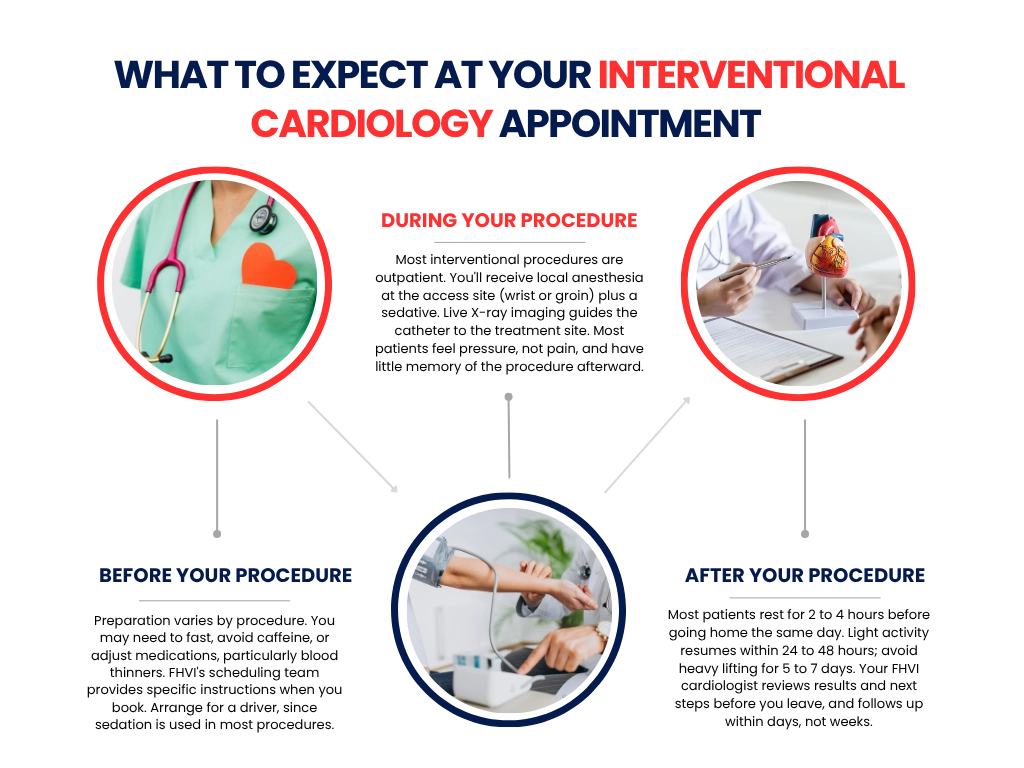
Local anesthesia and medications for comfort may be used during angioplasty. Patients may experience pressure or other sensations during the procedure, and the care team will explain what to expect beforehand.
Recovery varies depending on the procedure, access site, overall health, and whether additional treatment is performed. Your care team will provide individualized instructions regarding activity, medications, wound care, and follow-up.
Potential risks include bleeding or bruising at the access site, contrast reaction, kidney stress, blood vessel injury, abnormal heart rhythms, and uncommon but serious complications such as heart attack or stroke. Individual risk varies and is reviewed before treatment.
A general cardiologist evaluates and manages cardiovascular disease using medical treatment and diagnostic testing. An interventional cardiologist receives additional training in catheter-based procedures used to diagnose and treat selected cardiovascular conditions.
TAVR (transcatheter aortic valve replacement) replaces a diseased aortic valve through a catheter instead of open-heart surgery. It’s commonly used for patients with aortic stenosis who are at higher risk for traditional surgery.
MitraClip is a catheter-delivered clip that reduces leakage from the mitral valve (mitral regurgitation) without open surgery, typically for patients who are not ideal candidates for surgical valve repair.
Yes. FHVI operates outpatient cardiac catheterization labs at our Ocala SW 17th Street and SW 62nd Court locations.
Referral requirements may vary based on your insurance plan and clinical needs. Contact FHVI or your insurance provider to confirm whether a referral or prior authorization is required for your appointment or procedure.
FHVI accepts Medicare, Medicaid, and many major commercial insurance plans. Coverage, referral requirements, and prior authorization may vary by plan and procedure. Contact FHVI or your insurance provider to verify benefits before treatment
Procedure time varies depending on whether the catheterization is diagnostic only or whether additional treatment is required. Your care team can provide a more specific estimate based on the procedure planned for you.

