
What Is Cardiovascular Disease?
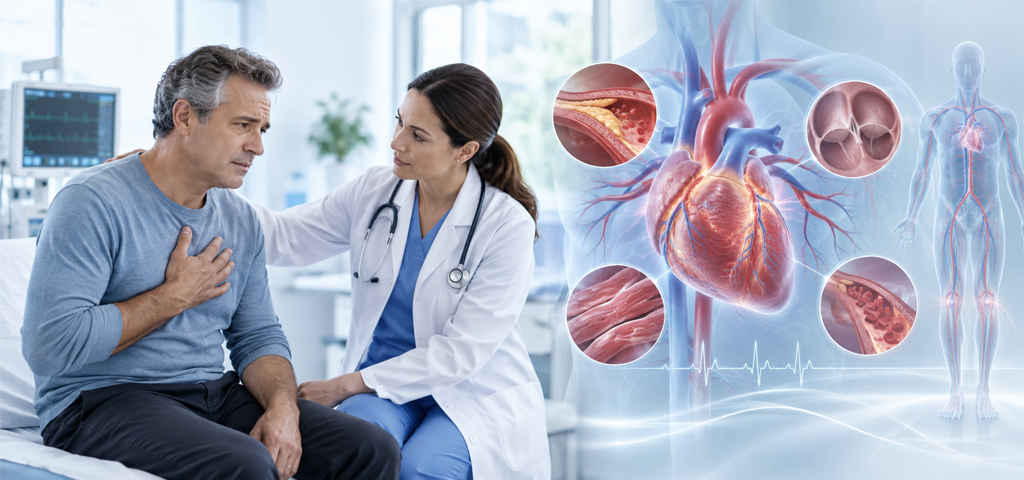
Cardiovascular disease is a broad term for conditions that affect the heart and blood vessels. These conditions can involve the coronary arteries, heart muscle, valves, heart rhythm, circulation, or other parts of the cardiovascular system.
Some cardiovascular diseases develop gradually and may not cause noticeable symptoms at first. Others can cause chest discomfort, shortness of breath, fatigue, palpitations, swelling, dizziness, or reduced exercise tolerance.
At Florida Heart & Vascular Institute, cardiovascular evaluation is based on each patient’s symptoms, medical history, risk factors, and diagnostic findings. The goal is to identify the underlying problem, understand its severity, and develop an individualized treatment and follow-up plan.
Common Cardiovascular Conditions We Evaluate
Coronary Artery Disease
Coronary artery disease develops when plaque narrows or blocks the arteries that supply blood to the heart.
It may cause chest discomfort, shortness of breath, reduced exercise tolerance, or other symptoms, although some patients may have few or no symptoms.
High Blood Pressure
High blood pressure places additional strain on the heart and blood vessels over time and can increase the risk of heart disease, stroke, kidney disease, and other complications.
Heart Failure
Heart failure occurs when the heart cannot pump or fill as effectively as the body needs. Symptoms may include shortness of breath, fatigue, swelling, reduced exercise tolerance, or difficulty lying flat.
Heart Valve Disease
Valve disease occurs when one or more heart valves do not open or close normally. Depending on the valve involved and the severity of the disease, patients may experience shortness of breath, fatigue, chest discomfort, dizziness, or swelling.
Heart Rhythm Disorders
Arrhythmias occur when the heart beats too fast, too slowly, or irregularly. Patients may experience palpitations, dizziness, fainting, fatigue, or shortness of breath.
Peripheral Artery Disease
Peripheral artery disease affects blood flow outside the heart, commonly in the legs. Symptoms may include leg pain while walking, numbness, coldness, skin changes, or wounds that heal slowly.
Cardiomyopathy
Cardiomyopathy affects the heart muscle and can interfere with the heart’s ability to pump effectively. Some patients may develop heart failure symptoms or abnormal heart rhythms.
Aortic Disease
Conditions affecting the aorta can include enlargement, aneurysm, or other structural abnormalities. These conditions often require imaging, monitoring, and specialist evaluation based on severity.
When You May Need Cardiovascular Evaluation
A cardiovascular evaluation may be appropriate when symptoms, risk factors, physical examination findings, or previous test results suggest a possible heart or circulation problem.
Cardiovascular evaluation may be important if you have:
- Chest discomfort or pressure
- Shortness of breath
- Palpitations or irregular heartbeat
- Dizziness or fainting
- Unexplained fatigue
- Reduced exercise tolerance
- Swelling in the legs or ankles
- Leg pain or cramping with walking
- High blood pressure & High cholesterol
- Diabetes or other cardiovascular risk factors
- A family history of heart disease
- Previous heart attack, stent, bypass surgery, or other cardiovascular treatment
- Abnormal EKG, stress test, imaging, or laboratory findings
Evaluation may also be recommended if you have:
- A history of coronary artery disease or prior heart problems
- Diabetes, high cholesterol, or a strong family history of heart disease
- A previous abnormal EKG, stress test, or imaging result
- Symptoms that continue despite current treatment
- Risk factors such as smoking, obesity, or a sedentary lifestyle
- A prior stroke, TIA, or vascular disease
- Need for follow-up after a cardiac procedure or hospitalization
- A referral for preventive cardiovascular screening or specialist care
Emergency Warning
Call 911 immediately for severe or persistent chest pain, severe shortness of breath, fainting, sudden weakness or numbness, stroke-like symptoms, or other signs of a medical emergency.
A Complete Picture of Your Cardiovascular Health
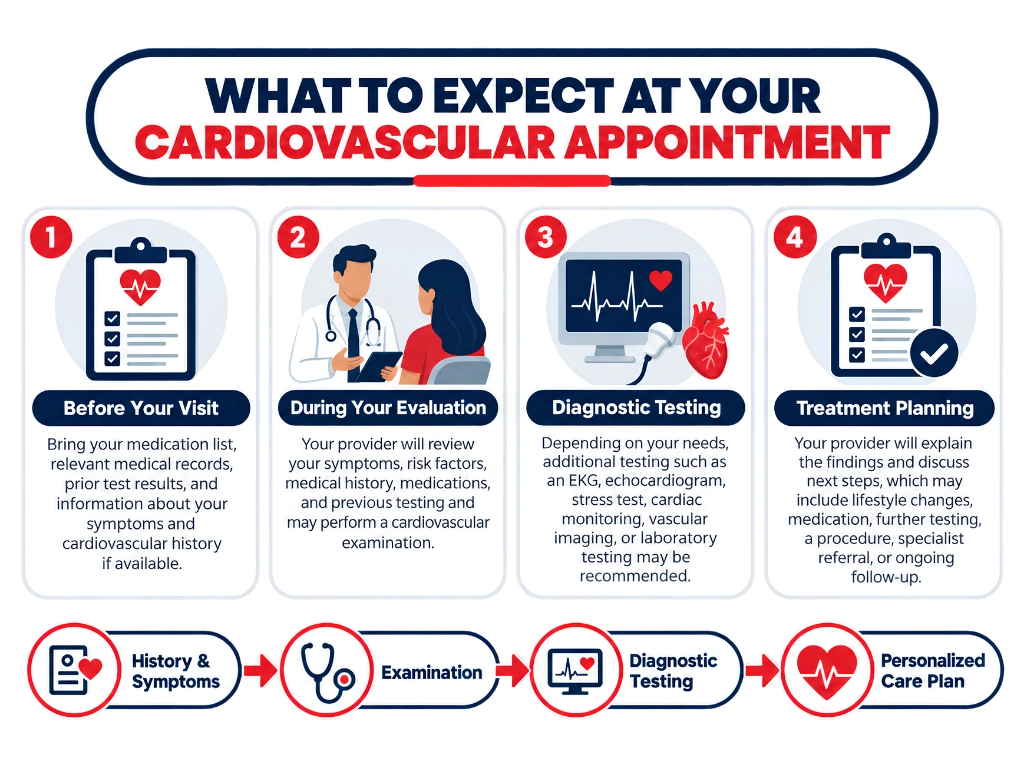
Cardiovascular conditions can affect different parts of the heart and circulation, so evaluation may include several types of testing. FHVI selects testing based on your symptoms, medical history, risk factors, and previous findings.
- Medical history and symptom review — helps identify risk factors, symptom patterns, and previous cardiovascular problems.
- Physical examination — may identify blood pressure changes, heart murmurs, swelling, abnormal pulses, or other findings.
- Electrocardiogram (EKG/ECG) — evaluates the heart’s electrical activity and rhythm.
- Echocardiography — evaluates heart structure, pumping function, and valve movement.
- Stress testing — assesses how the heart responds to exercise or medication-induced stress.
- Cardiac imaging — may provide additional information about heart function, blood flow, or cardiovascular anatomy.
- Vascular Doppler ultrasound — evaluates circulation in arteries and veins.
- Cardiac monitoring — may help identify intermittent rhythm abnormalities.
- Laboratory testing — can help evaluate cholesterol, blood sugar, kidney function, blood counts, and other cardiovascular risk factors.
- Cardiac catheterization — may be recommended when more detailed evaluation of coronary blood flow is needed.
The Right Treatment Depends on the Condition
Lifestyle & Risk-Factor Management
Heart-healthy nutrition, appropriate physical activity, smoking cessation, weight management, blood pressure control, and diabetes management may be part of long-term cardiovascular care.
Medication Management
Medications may be used to manage blood pressure, cholesterol, heart rhythm, fluid retention, blood clot risk, angina, heart failure, or other cardiovascular conditions.
Diagnostic & Monitoring Follow-Up
Some conditions require ongoing imaging, rhythm monitoring, laboratory testing, or other cardiovascular studies to track changes over time.
Catheter-Based Treatment
Selected coronary, vascular, valve, and structural heart conditions may be treated with minimally invasive catheter-based procedures.
Surgical Referral
When disease is severe or not well suited to medical or catheter-based treatment, cardiovascular surgical evaluation may be recommended.
Benefits and Considerations of Cardiovascular Treatment
Cardiovascular care can help identify disease earlier, manage symptoms, reduce risk, and guide treatment. The benefits and potential risks depend on the condition and the specific treatment recommended.
Potential Benefits
- Earlier Identification of Cardiovascular Disease Evaluation can help identify heart or vascular problems before they become more advanced.
- Improved Symptom Management Appropriate treatment may help reduce chest discomfort, shortness of breath, palpitations, swelling, or circulation-related symptoms.
- Risk Reduction Treatment of blood pressure, cholesterol, diabetes, rhythm disorders, and other risk factors may help reduce future cardiovascular complications.
- Individualized Treatment Planning Diagnostic findings help guide treatment based on each patient’s condition and overall health.
- Long-Term Cardiovascular Monitoring Ongoing follow-up can help track disease progression and adjust treatment when needed.
Considerations
- Treatment Varies by Condition Not every cardiovascular condition requires the same testing, medication, or procedure.
- Some Conditions Require Long-Term Management Many cardiovascular diseases are chronic and may require ongoing follow-up.
- Medication Side Effects Cardiovascular medications can have side effects and may require monitoring.
- Procedures Have Specific Risks Catheter-based or surgical treatments involve procedure-specific risks that should be reviewed beforehand.
- Regular Follow-Up Matters Changes in symptoms or test results may require treatment adjustments over time.
Concerned About Your Heart or Circulation?
If you have symptoms, cardiovascular risk factors, or abnormal test results, FHVI can help evaluate your heart and vascular health and determine the appropriate next step.
Evaluation, Testing & Treatment for Heart and Vascular Conditions
Diagnostic & Monitoring Services
Cardiovascular evaluation often begins with diagnostic testing and monitoring to better understand heart function, circulation, rhythm, and cardiovascular risk.
Cardiovascular Diagnostic Testing

Cardiac Imaging
Cardiac imaging can help evaluate heart structure, pumping function, blood flow, valve movement, and selected cardiovascular conditions. The appropriate imaging study depends on symptoms, previous findings, and the condition being investigated.
Cardiac Stress Testing
Stress testing evaluates how the heart responds to exercise or medication-induced stress. It may help investigate chest discomfort, shortness of breath, reduced exercise tolerance, or possible reduced blood flow to the heart.
Cardiac Monitoring
Cardiac monitoring records heart rhythm over time and may help identify intermittent abnormalities that are not captured during a brief office EKG. Monitoring may be considered for palpitations, dizziness, fainting, or suspected arrhythmias.
Specialty & Advanced Cardiovascular Care
When testing identifies a specific cardiovascular condition, patients may be connected with the appropriate specialty or advanced treatment pathway.

Interventional Cardiology
Interventional cardiology uses minimally invasive catheter-based techniques to evaluate and treat selected coronary, peripheral vascular, valve, structural heart, and other cardiovascular conditions.
Cardiac Electrophysiology
Cardiac electrophysiology focuses on abnormal heart rhythms and the heart’s electrical system. Specialized evaluation and treatment may be recommended for conditions such as atrial fibrillation, tachycardia, bradycardia, or other arrhythmias.

Vascular Treatments
Vascular care focuses on conditions affecting circulation in the arteries and veins. Depending on the diagnosis, care may include vascular imaging, medical management, or minimally invasive treatment for selected arterial or venous conditions.
Cardiovascular Cath Lab
The cardiovascular cath lab supports diagnostic catheterization and selected catheter-based treatments for coronary and peripheral arterial conditions. Procedures are chosen based on symptoms, diagnostic findings, and cardiovascular anatomy.

Cardiovascular Surgery Evaluation
Patients with severe or complex heart, valve, aortic, or vascular disease may require cardiovascular surgical evaluation. FHVI can help coordinate diagnostic testing, surgical referral, and ongoing cardiovascular follow-up.
Ongoing Cardiovascular Care
Cardiovascular disease often requires continued follow-up to monitor symptoms, test results, medications, risk factors, and long-term heart and vascular health.

Follow-Up Cardiovascular Care
Experienced Providers for Comprehensive Heart & Vascular Care
Dr. Asad Qamar, MD
Interventional Cardiologist
- Board Certified
- 30+ Years of Experience
- Founder & CEO
David Edmund Ruggieri, MD
Cardiologist
- Board Certified
- 30+ Years Experience
- Interventional Cardiology
Claudio F. Manubens, MD
Interventional Cardiologist
- Board Certified
- 25+ Years Experience
- Former Chief of Cardiology
Mohammad Kaleem, MD
Interventional Cardiologist
- Board Certified
- 25+ Years Experience
- Fellow, American College of Cardiology
Aalok Dilipkumar Patel, MD
Interventional Cardiologist
- Board Certified
- 10+ Years Experience
- Structural Heart Specialist
Find an FHVI Cardiovascular Care Location Near You
Request Your Appointment
Complete the form below with your preferred cardiologist, location, and reason for visit. An FHVI team member will contact you to confirm availability and next steps.
Trusted Cardiovascular Care Since 1997
Serving Patients Since 1997
Decades of cardiovascular care experience have shaped a patient-first approach focused on quality, continuity, and trust.
Physician-Led Cardiovascular Care
Our physicians stay closely involved in evaluation, treatment planning, and follow-up.
Advanced Diagnostic Technology
Modern cardiac and vascular testing supports accurate evaluation and informed care decisions.
Personalized Treatment Plans
Care recommendations are based on each patient’s symptoms, medical history, diagnostic findings, and individual needs.
Minimally Invasive Care Options
When appropriate, FHVI offers catheter-based and other minimally invasive treatment options for selected cardiovascular conditions.
Coordinated Care Across Florida
Multiple FHVI locations help patients access cardiovascular evaluation, testing, treatment, and follow-up closer to home.
Frequently Asked Questions
Cardiovascular disease refers to conditions affecting the heart and blood vessels, including coronary artery disease, heart failure, valve disease, arrhythmias, peripheral artery disease, and other cardiovascular conditions.
Symptoms may include chest discomfort, shortness of breath, palpitations, dizziness, fainting, fatigue, swelling, reduced exercise tolerance, or circulation-related symptoms in the legs.
Yes. Some cardiovascular conditions can develop gradually without obvious symptoms, which is why risk-factor management and appropriate evaluation are important.
Testing may include EKG, echocardiography, stress testing, cardiac imaging, cardiac monitoring, vascular ultrasound, laboratory testing, or cardiac catheterization depending on the condition.
Common risk factors include high blood pressure, high cholesterol, diabetes, smoking, obesity, inactivity, age, and family history.
Yes. Many cardiovascular conditions can be managed with lifestyle changes, medication, monitoring, or catheter-based treatment. Surgery is recommended only when appropriate.
Heart disease primarily refers to conditions affecting the heart itself, while cardiovascular disease includes both heart conditions and diseases affecting the blood vessels.
You may benefit from cardiovascular evaluation if you have concerning symptoms, significant risk factors, abnormal testing, or a known heart or vascular condition requiring follow-up.
Follow-up frequency depends on the specific condition, severity, symptoms, medications, test results, and treatment plan.
FHVI provides cardiovascular evaluation and care across cardiac and vascular specialties, with services selected based on the patient’s diagnosis and clinical needs.