What Is Cardiac Catheterization?

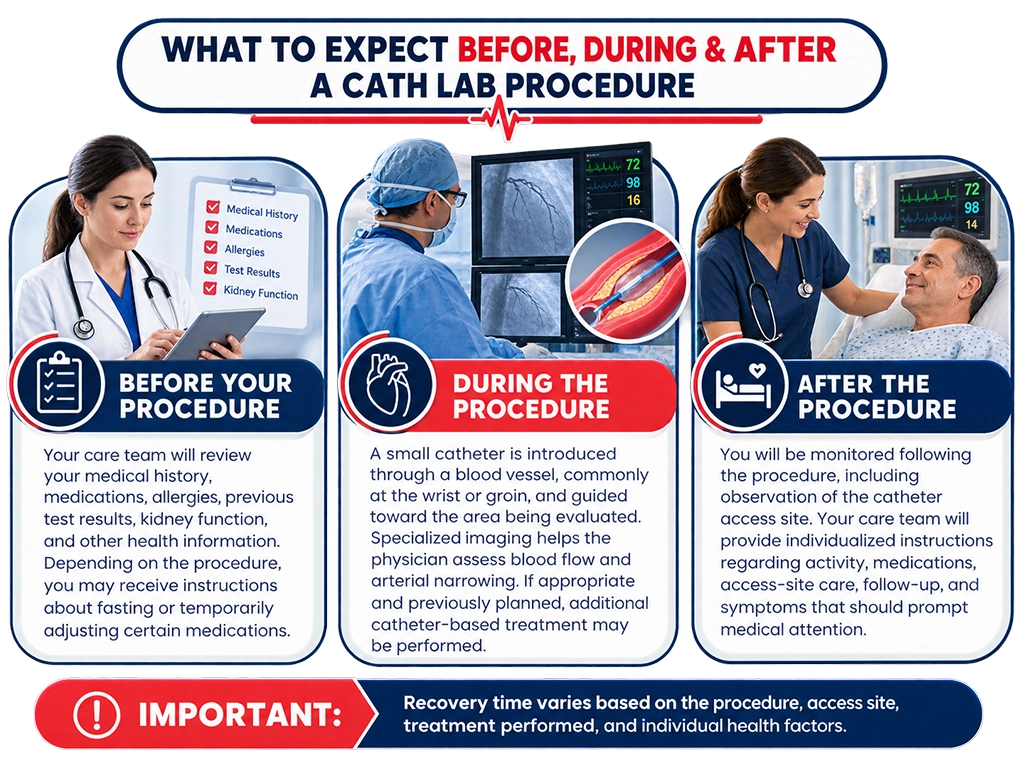
Chest pain that won’t go away, an abnormal stress test result, or a cardiologist mentioning the word “catheterization” for the first time it’s natural to want a plain explanation before you agree to any procedure. Cardiac catheterization, often called a heart cath, is a procedure that lets your cardiologist look directly at your coronary arteries using a thin, flexible catheter guided through a blood vessel, usually in the wrist or groin, rather than through open surgery.

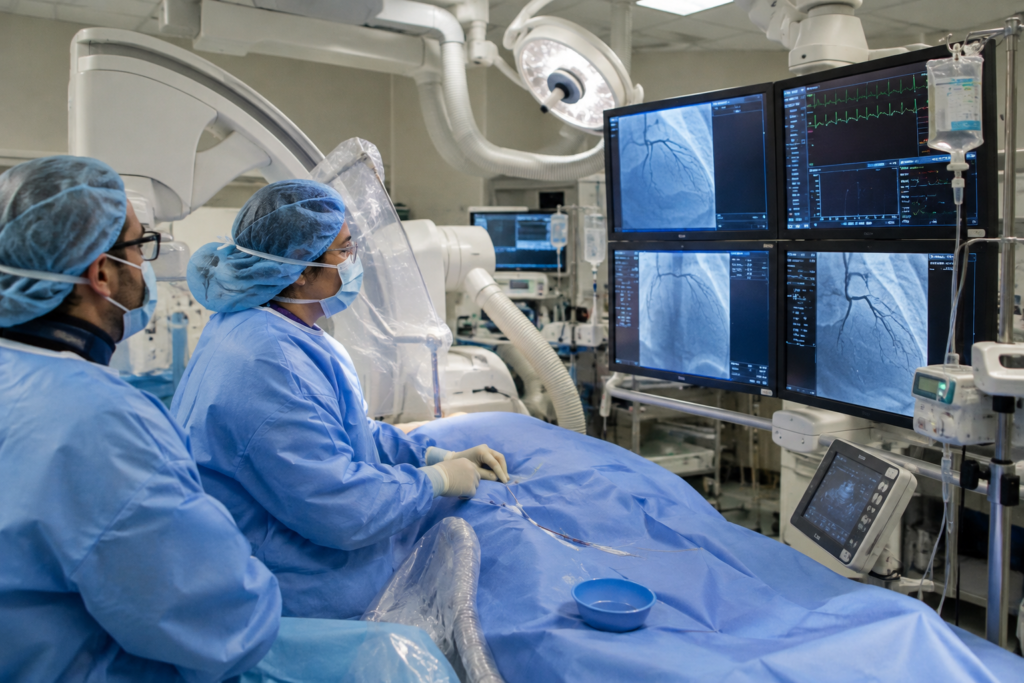
At FHVI’s outpatient cath labs, the same visit that diagnoses a blockage can often treat it too. Your interventional cardiologist injects contrast dye and takes live X-ray images (coronary angiography) to see exactly where and how severe a blockage is. If a treatable blockage is found, angioplasty and stent placement can follow immediately, meaning one appointment covers both the answer and the fix.

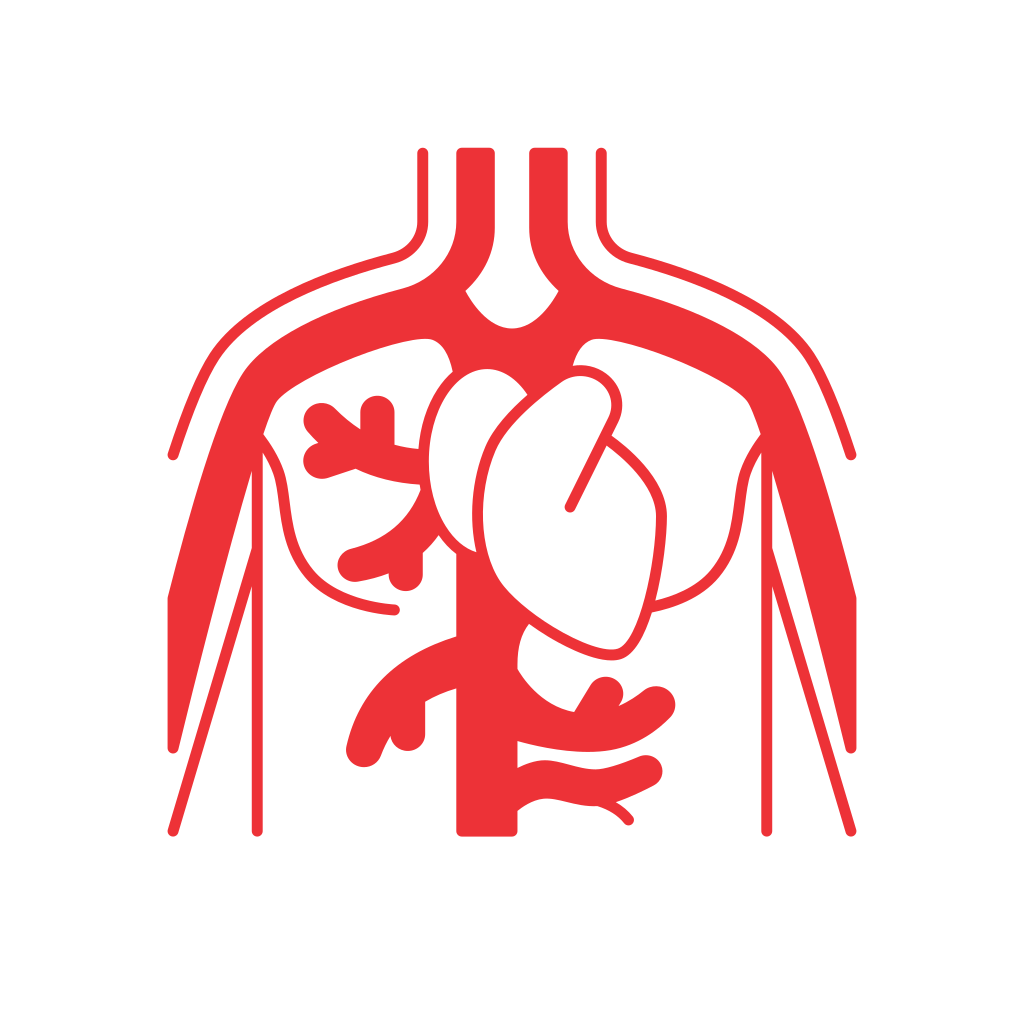
Diagnostic Cardiac Catheterization

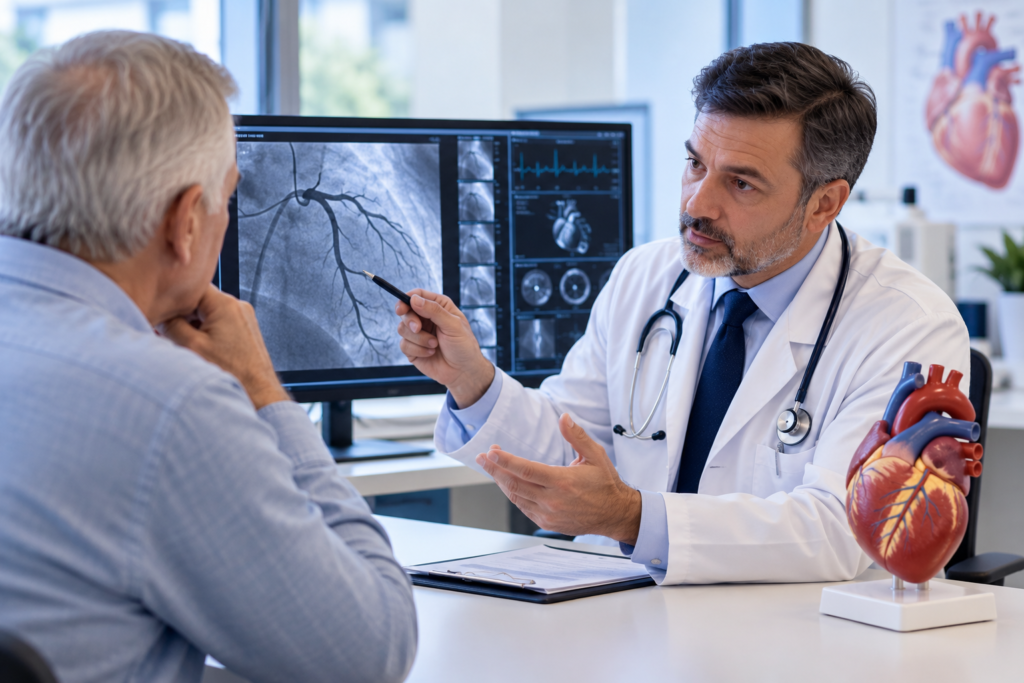
The definitive test for coronary artery disease. Contrast dye and live X-ray imaging show exactly where an artery is narrowed and how severe the blockage is, when non-invasive tests like a stress test aren’t conclusive enough.

Coronary Angiography

The imaging portion of the procedure. A coronary angiogram produces a detailed picture of the coronary arteries, the gold standard for confirming and locating blockages.

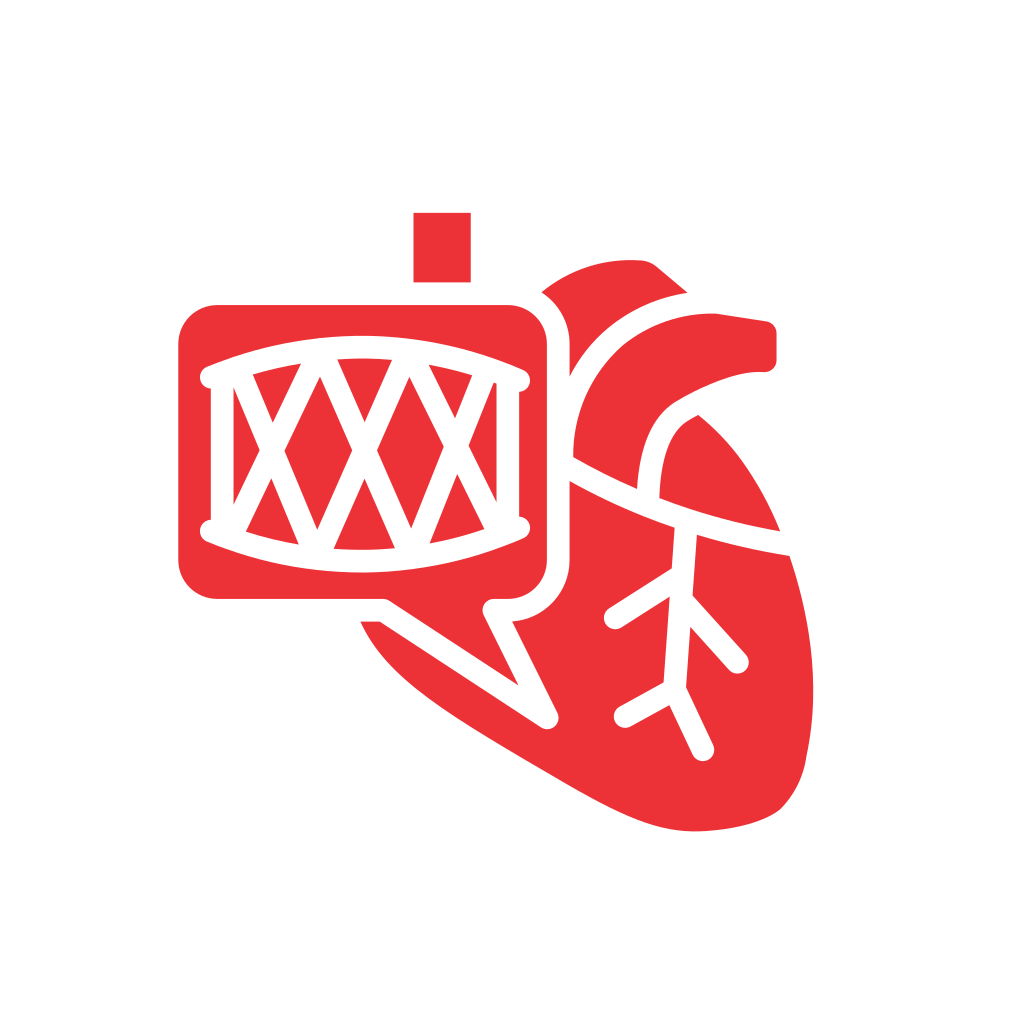
Angioplasty and Stent Placement (PCI)

When a blockage is found and treatable, a small balloon opens the narrowed artery (angioplasty) and a stent, a mesh tube, holds it open. This is percutaneous coronary intervention (PCI), typically performed in the same session as the diagnostic catheterization.

Wrist vs. Groin Access

FHVI’s preferred approach is radial (wrist) access, which carries a lower bleeding risk and allows faster mobility than traditional femoral (groin) access. Your cardiologist will discuss which approach is right for your anatomy.

When You May Need Cardiac Catheterization

Cardiac catheterization is usually recommended after other tests point toward a possible blockage, or when urgent evaluation is needed. Some symptoms warrant same-week evaluation; others are appropriate for a scheduled workup.

Need Cardiac Catheterization

Get tested urgently, if you have:

  • Chest pain or pressure (angina) at rest or with minimal activity
  • Suspected or confirmed heart attack
  • An abnormal or inconclusive stress test result
  • New or worsening shortness of breath with a known heart condition
  • Unexplained heart failure with reduced pumping function
  • Elevated cardiac enzymes (troponin) found on recent bloodwork

Get screened proactively, if you have:

  • Known coronary artery disease needing follow-up evaluation
  • Angina that occurs predictably with exertion and eases with rest
  • Prior stents or bypass surgery requiring reassessment
  • Multiple cardiac risk factors (diabetes, high blood pressure, high cholesterol, smoking) and new symptoms

Emergency Warning

Chest pain that doesn't resolve, pain spreading to the arm, jaw, neck, or back, sudden severe shortness of breath, or cold sweat with chest discomfort may be a heart attack. Call 911 immediately. Do not drive yourself.

Cardiac Catheterization Risks and Benefits

Cardiac catheterization is a well-established, generally safe procedure performed on an outpatient basis at FHVI. Understanding the risk-benefit picture helps you make an informed decision.

Benefits

Risks

Have Chest Pain or an Abnormal Stress Test Result?

FHVI’s board-certified interventional cardiologists perform outpatient cardiac catheterization at our Ocala cath labs.

Cardiac Cath Procedures at FHVI

Every procedure below is available at FHVI’s outpatient cath labs without an outside referral.

Echocardiogram-Echo

Echocardiogram (Echo)

30–45 min

Uses ultrasound to evaluate your heart's chambers, valves, pumping strength, and ejection fraction. Available as transthoracic (TTE) or transesophageal (TEE) studies depending on your condition.

30–45 min
Usually no preparation
Resume immediately
Electrocardiogram-EKG

Electrocardiogram (EKG)

10 min

Records your heart's electrical activity to detect abnormal rhythms, previous heart attacks, and conduction disorders.

10 min
No preparation
Resume immediately
Exercise Stress Test (Treadmill)

Exercise Stress Test (Treadmill)

45–60 min

Measures how your heart performs during exercise to evaluate blood flow, rhythm changes, and exercise tolerance.

45–60 min
Fast 3 hrs
Resume immediately
Nuclear Stress Test”
         class=

Nuclear Stress Test

3–4 hrs

Uses a small amount of radioactive tracer to compare blood flow to your heart at rest and during stress, helping identify blocked arteries.

3–4 hrs
No food or caffeine
Resume immediately
Stress Echocardiogram”
         class=

Stress Echocardiogram

60–90 min

Combines ultrasound imaging with exercise or medication induced stress to evaluate heart muscle function and blood flow.

60–90 min
Fast 3 hrs
Resume immediately
Holter Monitor”
         class=

Holter Monitor

24–48 hrs

Continuously records your heart rhythm during normal daily activities to detect intermittent rhythm abnormalities.

Wear 24–48 hrs
Shower beforehand
Return device
Event-Monitor”
         class=

Event Monitor

2–4 weeks

Records your heart rhythm during symptoms or automatically when an abnormal rhythm occurs, helping diagnose infrequent heart rhythm problems.

2–4 weeks
No preparation
Continue normal activities
 Implantable-Loop-Recorder”
         class=

Implantable Loop Recorder

10 min

A small device placed under the skin continuously monitors your heart rhythm for up to three years to detect unexplained fainting or rare arrhythmias.

10 min procedure
Local anesthesia
Resume per physician
Coronary-Calcium-Score”
         class=

Coronary Calcium Score

10–15 min

A specialized CT scan that measures calcium buildup in your coronary arteries to assess your future risk of heart disease.

10–15 min
No preparation
Resume immediately
CT-Coronary-Angiography-Cardiac-CTA.”
         class=

CT Coronary Angiography (Cardiac CTA)

30–45 min

Uses contrast enhanced CT imaging to produce detailed pictures of your coronary arteries without requiring cardiac catheterization.

30–45 min
Preparation may vary
Resume immediately
Cardiac-MRI”
         class=

Cardiac MRI

45–75 min

Provides detailed images of your heart muscle, valves, and surrounding structures without radiation, helping diagnose many complex heart conditions.

45–75 min
Preparation varies
Resume immediately

Carotid Duplex Ultrasound & Vascular Studies

20–45 min

Uses ultrasound to evaluate blood flow in the carotid arteries, leg arteries and veins, or abdominal aorta to detect narrowing, blockages, aneurysms, or blood clots.

20–45 min
Usually no preparation
Resume immediately

Meet Our Cath Lab Physicians

A board-certified interventional cardiologist with dedicated fellowship training in catheter-based coronary treatment performs every cardiac catheterization at FHVI.

Cardiac Catheterization Near Me — FHVI Locations

FHVI operates outpatient cardiac catheterization labs at our Ocala and Davenport locations, with interventional cardiology consultation available more broadly across Florida. Patients searching for “cardiac catheterization Ocala FL” or “cath lab Ocala FL” have direct access to same-day diagnostic and treatment procedures.

Ocala — SW 62nd Court

7535 SW 62nd Court, Ocala, Florida 34476

Ocala — SW 17th Street

1609 SW 17th Street, Suite 100, Ocala, FL 34471

Lake Wales

1136 Bryn Mawr Ave, Lake Wales, Florida 33853

Why Patients Choose Florida Heart & Vascular Institute

From your first appointment to your last follow-up, here’s what makes care at FHVI different.

One Practice. Full Diagnostic Spectrum

Complete cardiac imaging under one roof with no outside referrals or unnecessary delays.

Board Certified Cardiologists

Your imaging studies are interpreted by experienced board certified cardiovascular specialists.

15 Convenient Locations in Florida

High quality heart care close to home throughout Central and North Florida.

Fast Results. Faster Treatment

Quick turnaround on reports helps your physician begin treatment sooner.

Advanced Technology You Can Trust

State of the art imaging equipment delivers accurate and reliable diagnostic results.

Patient Centered Care Florida

Every patient receives compassionate, personalized care from diagnosis through treatment.

Frequently Asked Questions

Cardiac catheterization, or a heart cath, is a procedure that lets your cardiologist look directly at your coronary arteries using a thin catheter guided through a blood vessel, usually in the wrist or groin, to diagnose and often treat blockages.

A diagnostic-only catheterization takes 20 to 40 minutes. Adding stent placement typically adds 30 to 60 minutes. Plan for 2 to 4 hours total at the cath lab including preparation and recovery.

With radial (wrist) access, most patients go home the same day and resume light activity within 24 to 48 hours. Avoid heavy lifting for 5 to 7 days after the procedure.

Risks include bruising or bleeding at the access site, a small risk of allergic reaction to contrast dye, and rare risks such as blood vessel injury or heart attack. Your cardiologist reviews your individual risk beforehand.

Radial (wrist) access has a lower bleeding risk and faster recovery, allowing most patients to sit up within an hour. Femoral (groin) access is used when radial access isn’t suitable for your anatomy.

Yes. If a treatable blockage is found during the diagnostic portion of the procedure, angioplasty and stent placement are typically performed in the same session, avoiding a second procedure.

You receive local anesthesia at the access site and a sedative. Most patients feel pressure or warmth rather than pain, and many have little memory of the procedure afterward.

A diagnostic catheterization identifies blockages through coronary angiography. PCI (angioplasty and stenting) treats the blockage. FHVI performs both in the same session where possible.

Your FHVI cardiologist gives specific instructions — blood thinners are often paused, and metformin is typically stopped 48 hours before if contrast dye is used.

Yes. Because of sedation, you’ll need someone to drive you home after your cardiac catheterization.

Yes. FHVI operates outpatient cath labs at our Ocala SW 17th Street and SW 62nd Court locations, in addition to our Davenport cath lab.

FHVI accepts referrals from primary care physicians and cardiologists, and also sees patients directly for an initial consultation to determine if catheterization is appropriate.

Yes. FHVI accepts Medicare, Medicaid, and most major commercial insurance plans. Call 352-619-2550 to verify your specific coverage.