

What Is Cardiac Stress Testing?
Cardiac stress testing evaluates how the heart performs when it is working harder than it does at rest. Depending on the type of test, stress may be created through exercise or with medication when a patient is unable to exercise adequately.
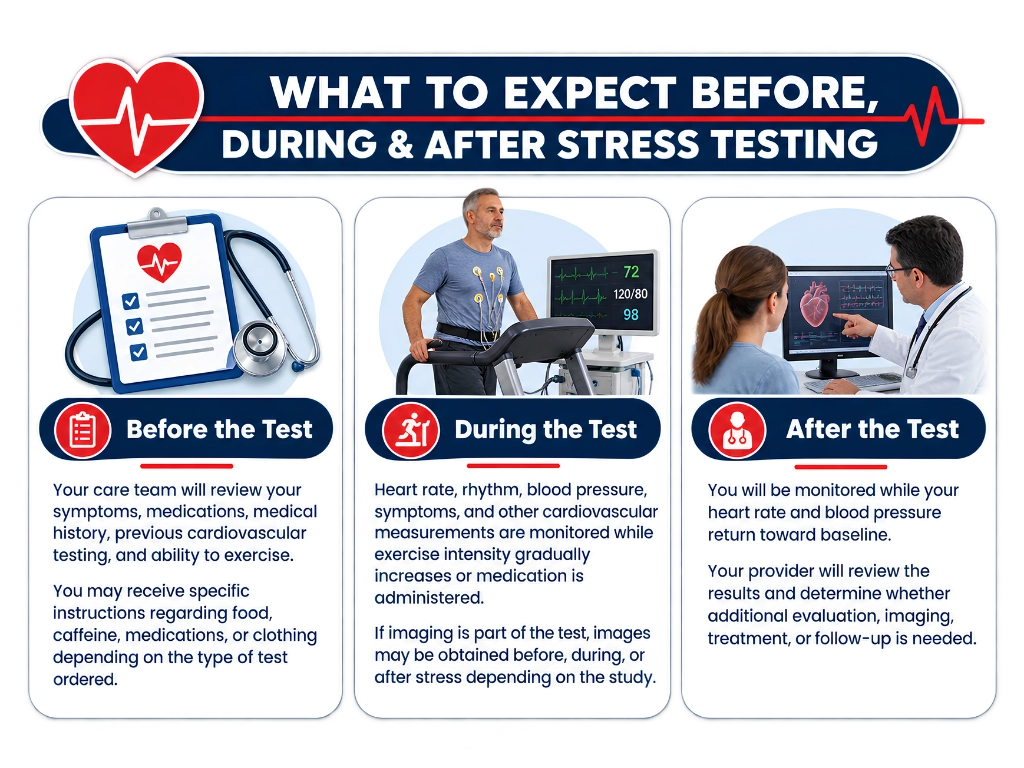
During testing, your care team may monitor heart rate, heart rhythm, blood pressure, symptoms, and—in selected tests—cardiac imaging or blood flow.
At Florida Heart & Vascular Institute, stress testing can help investigate symptoms such as chest discomfort or shortness of breath, evaluate possible reduced blood flow to the heart, assess exercise-related symptoms, and guide further cardiovascular care.
What Cardiac Stress Testing May Help Evaluate
Reduced Blood Flow to the Heart
Stress testing may help identify signs that the heart muscle is not receiving enough blood during increased workload. This can support evaluation for possible coronary artery disease.
Chest Discomfort
Patients with chest pressure, tightness, or discomfort, especially during activity, may undergo stress testing to help determine whether symptoms may be related to reduced coronary blood flow.
Shortness of Breath
Stress testing may be used when shortness of breath occurs during activity, and additional information is needed about cardiovascular response to exertion.
Exercise Intolerance
Unexplained fatigue, reduced stamina, or difficulty performing previously well-tolerated activities may warrant a cardiovascular evaluation.
Known Coronary Artery Disease
Patients with known coronary disease may occasionally require stress testing to assess changes in symptoms, functional capacity, or cardiovascular response.
Abnormal or Inconclusive Previous Testing
Stress testing may be recommended when an EKG, imaging study, or other cardiovascular evaluation suggests that more information is needed.
When You May Need Cardiac Stress Testing
A cardiac stress test may be recommended when symptoms, cardiovascular risk factors, physical exam findings, or prior test results suggest the heart should be evaluated under increased workload.
Cardiac Stress Testing May Be Considered If You Have:
- Chest discomfort or pressure during activity
- Shortness of breath with exertion
- Unexplained fatigue or reduced exercise tolerance
- Symptoms that occur during physical activity
- Known coronary artery disease with changing symptoms
- An abnormal or inconclusive EKG
- Cardiovascular risk factors with concerning symptoms
- Previous cardiac treatment with new or recurrent symptoms
- Symptoms that require further evaluation after an initial cardiology assessment
Stress Testing May Also Be Used To:
- Evaluate how the heart responds to increased workload
- Assess heart rate and rhythm during exercise
- Look for evidence of reduced blood flow to the heart
- Evaluate exercise-related symptoms
- Assess functional capacity in selected patients
- Support further cardiovascular testing or treatment decisions
- Help determine whether cardiac imaging or catheterization may be appropriate
- Monitor selected patients with known cardiovascular disease
- Support pre-procedure or preoperative cardiovascular assessment when clinically indicated
Emergency Warning
Call 911 immediately for severe or persistent chest pain, severe shortness of breath, fainting, or other symptoms that may indicate a medical emergency.
Understanding How Your Heart Responds to Activity
Before recommending a stress test, FHVI reviews your symptoms, medical history, cardiovascular risk factors, medications, previous test results, and ability to exercise. This helps determine which type of stress testing may provide the most useful information.
- Medical history and symptom review — helps identify when symptoms occur and whether they are related to activity.
- Electrocardiogram (EKG/ECG) — evaluates the heart’s electrical activity at rest and may help determine the appropriate type of stress test.
- Blood pressure and heart rate assessment — provides baseline information before testing.
- Exercise capacity review — helps determine whether treadmill exercise is appropriate.
- Echocardiography — may be used with stress testing to evaluate heart function and wall motion.
- Nuclear imaging — may be combined with stress testing to evaluate blood flow to the heart muscle.
- Medication-induced stress — may be used when adequate exercise is not possible.
- Follow-up cardiovascular evaluation — results are reviewed together with symptoms and other findings to determine the next step.
Different Stress Tests Answer Different Clinical Questions
Exercise Treadmill Stress Test
A treadmill stress test monitors heart rate, rhythm, blood pressure, and symptoms while exercise gradually increases. It may be appropriate when a patient can exercise adequately and the resting EKG can be interpreted during testing.
Stress Echocardiography
Stress echocardiography combines stress testing with ultrasound images of the heart. Images obtained before and after stress can help evaluate heart function and changes in heart muscle movement during increased workload.
Nuclear Stress Testing
Nuclear stress testing combines stress with specialized imaging and a small amount of radioactive tracer to evaluate blood flow to the heart muscle. Stress may be produced through exercise or medication depending on the patient’s clinical needs.
Pharmacologic Stress Testing
Medication may be used to create a stress-like cardiovascular response when a patient is unable to exercise adequately. The medication used and accompanying imaging depend on the type of stress test ordered.
Benefits and Considerations of Cardiac Stress Testing
Stress testing can provide valuable information about how the heart functions during increased workload. The potential benefits and considerations depend on the type of test performed and each patient’s health needs.
Potential Benefits
- Evaluates the Heart Under Stress Testing can reveal changes that may not be present while the heart is at rest.
- Helps Assess Blood Flow Selected stress tests may provide information about whether the heart muscle receives adequate blood flow during increased demand.
- Connects Symptoms With Activity Testing may help determine whether chest discomfort, shortness of breath, dizziness, or fatigue occur with cardiovascular changes.
- Supports Diagnosis & Treatment Planning Results can help guide additional testing, medication management, or other cardiovascular treatment decisions.
- Provides Functional Information Exercise-based testing can provide information about activity tolerance and cardiovascular response to exertion.
Considerations
- Temporary Symptoms During Testing Exercise or medication-induced stress may cause shortness of breath, fatigue, chest discomfort, dizziness, or palpitations.
- Abnormal Heart Rhythm Stress can occasionally trigger rhythm changes that require the test to be stopped or treated.
- Blood Pressure Changes Blood pressure may rise or fall during stress testing and is monitored throughout the test.
- Imaging-Related Considerations Nuclear testing involves a small amount of radioactive tracer, while some studies may involve additional test-specific considerations.
- Rare Serious Complications Serious cardiovascular complications are uncommon, but testing is performed under clinical supervision so symptoms and abnormal findings can be addressed promptly.
Experiencing Chest Discomfort or Shortness of Breath With Activity?
A cardiac stress test may help your care team understand how your heart responds to increased workload and whether further cardiovascular evaluation is needed.
Cardiac Stress Testing & Stress Imaging
Core Cardiac Stress Testing
These tests help evaluate cardiovascular response to increased workload and may provide information about heart rhythm, symptoms, blood pressure, heart function, and blood flow.
Exercise Treadmill Stress Testing
Stress Echocardiography
Nuclear Stress Testing
Nuclear stress testing combines cardiovascular stress with specialized imaging and a small amount of radioactive tracer to evaluate blood flow to the heart muscle. Stress may be produced through exercise or medication depending on clinical needs.
Pharmacologic Stress Testing
Related Cardiac Testing & Diagnostic Evaluation
Stress testing is often part of a broader cardiovascular evaluation. Additional testing may be used before or after a stress test depending on symptoms and findings.
Electrocardiogram (EKG)
Echocardiography
PET Cardiac Imaging
Cardiac Catheterization
Experienced Providers for Cardiovascular Stress Evaluation
Find an FHVI Stress Testing Location Near You
Request Your Appointment
Complete the form below with your preferred cardiologist, location, and reason for visit. An FHVI team member will contact you to confirm availability and next steps.
Trusted Cardiovascular Care Since 1997
Serving Patients Since 1997
Decades of cardiovascular care experience have shaped a patient-first approach focused on quality, continuity, and trust.
Physician-Led Cardiovascular Care
Our physicians stay closely involved in evaluation, treatment planning, and follow-up.
Advanced Diagnostic Technology
Modern cardiac and vascular testing supports accurate evaluation and informed care decisions.
Personalized Treatment Plans
Care recommendations are based on each patient’s symptoms, medical history, diagnostic findings, and individual needs.
Minimally Invasive Care Options
When appropriate, FHVI offers catheter-based and other minimally invasive treatment options for selected cardiovascular conditions.
Coordinated Care Across Florida
Multiple FHVI locations help patients access cardiovascular evaluation, testing, treatment, and follow-up closer to home.
Frequently Asked Questions
A cardiac stress test evaluates how the heart responds when it works harder than it does at rest, either through exercise or medication-induced stress.
Stress testing may be recommended for chest discomfort, shortness of breath, reduced exercise tolerance, suspected coronary artery disease, or abnormal previous testing.
No. Patients who cannot exercise adequately may undergo medication-induced stress instead.
A nuclear stress test combines cardiovascular stress with specialized imaging and a small amount of radioactive tracer to evaluate blood flow to the heart muscle.
A stress echocardiogram combines stress testing with ultrasound images of the heart to evaluate how the heart muscle functions during increased workload.
Stress testing is performed under clinical supervision. Temporary symptoms can occur, and serious cardiovascular complications are uncommon. Your care team will review whether testing is appropriate for you.
Medication instructions vary depending on the test and your medical condition. Follow the specific instructions provided by your care team.
Preparation varies by test. Some tests require fasting or avoiding caffeine, so follow the instructions provided before your appointment.
Your cardiologist will review the findings together with your symptoms and other test results. Additional imaging, cardiac catheterization, medication changes, or other evaluation may be recommended.
The total appointment time varies depending on the type of stress test and whether imaging is included.
Coverage depends on medical necessity, the type of test, your insurance plan, referral requirements, and prior authorization.