
What Is a Cardiovascular Cath Lab?

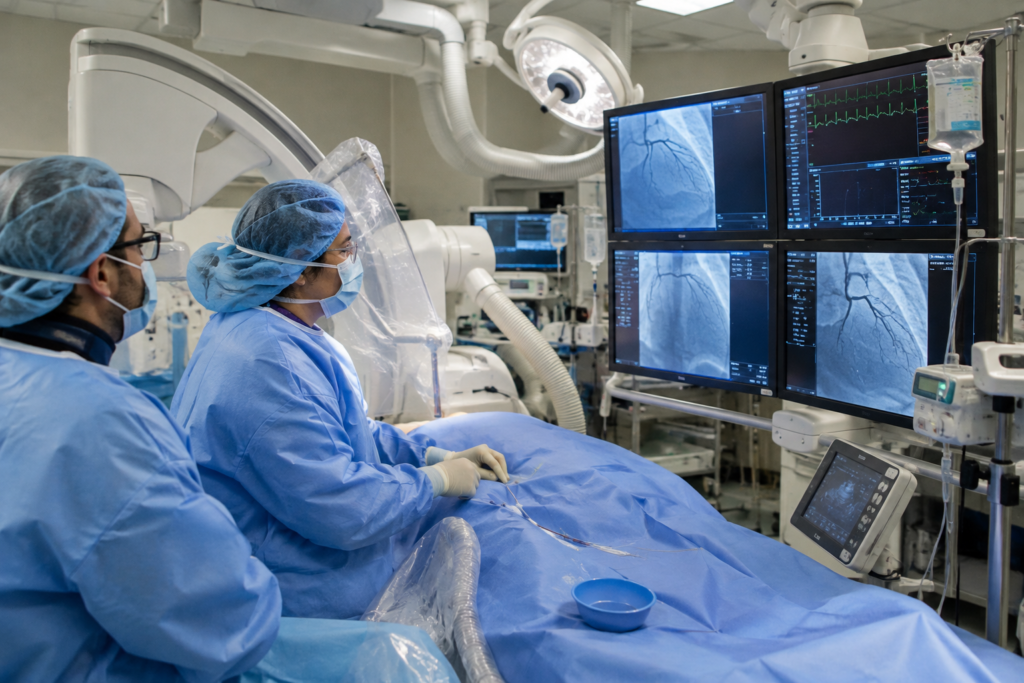
A cardiovascular catheterization lab, commonly called a cath lab, is a specialized clinical environment where physicians use imaging and minimally invasive catheter-based techniques to evaluate and treat certain heart and blood vessel conditions. During a cath lab procedure, a thin catheter is guided through a blood vessel—commonly from the wrist or groin—to examine blood flow, identify narrowing or blockages, and perform treatment when appropriate

Cardiovascular cath lab for cardiac catheterization and catheter-based treatment

At Florida Heart & Vascular Institute, cath lab care may include cardiac catheterization, coronary angioplasty and stenting, peripheral transluminal angioplasty (PTA), and atherectomy. The appropriate procedure depends on each patient’s symptoms, diagnostic findings, cardiovascular anatomy, medical history, and overall health.

Coronary Artery Disease

Coronary artery disease develops when plaque builds up within the arteries that supply blood to the heart. Narrowing or blockage can reduce blood flow and may cause chest discomfort, shortness of breath, or other cardiovascular symptoms. Cardiac catheterization can provide detailed information about the coronary arteries and help determine whether medical management, angioplasty, stenting, or another treatment may be appropriate.

Peripheral Artery Disease (PAD)

Peripheral artery disease, or PAD, occurs when arteries outside the heart—commonly in the legs—become narrowed or blocked. Patients may experience leg pain while walking, numbness, coldness in the feet, changes in skin color, or wounds that are slow to heal. When clinically appropriate, catheter-based procedures such as peripheral angioplasty or atherectomy may be used to help improve blood flow.

Significant Arterial Narrowing

Some patients have arterial narrowing identified through cardiovascular imaging, stress testing, vascular studies, or other diagnostic evaluation. A cath lab procedure may provide more detailed information about the location and severity of disease and, in selected cases, allow treatment during the same procedural encounter when clinically appropriate.

Complex Arterial Plaque

Calcified or difficult-to-treat plaque can sometimes make standard angioplasty more challenging. In selected patients, atherectomy may be used to remove or modify plaque within a narrowed artery as part of a catheter-based treatment plan.

When You May Need a Cardiac Catheterization or Cath Lab Evaluation

A cath lab evaluation may be recommended when symptoms, physical findings, or previous cardiovascular testing suggest reduced blood flow to the heart or peripheral arteries. An FHVI cardiovascular specialist can review your symptoms and test results and determine whether cardiac catheterization or another catheter-based procedure may be appropriate.

Cardiologist reviewing symptoms and test results with a patient before cardiac catheterization evaluation

Seek Prompt Medical Evaluation If You Have:

  • Chest discomfort or pressure during activity
  • New or worsening shortness of breath
  • Chest symptoms that are becoming more frequent
  • Reduced exercise tolerance or unexplained fatigue
  • Known coronary artery disease with new or progressive symptoms
  • New symptoms after a previous coronary stent or cardiac procedure
  • Leg pain or cramping with walking
  • Other symptoms suggesting reduced circulation

Cath Lab Evaluation May Also Be Recommended After:

  • An abnormal or inconclusive stress test
  • Abnormal cardiac imaging
  • A cardiology evaluation suggesting coronary artery narrowing
  • A diagnosis of peripheral artery disease
  • Previous coronary intervention requiring additional assessment
  • Diagnostic testing showing significant arterial narrowing
  • Referral from a cardiologist for cardiac catheterization

Emergency Warning

Call 911 immediately for severe or persistent chest pain, chest pressure with sweating or nausea, severe shortness of breath, fainting, stroke-like symptoms, or other symptoms that may indicate a medical emergency. Do not drive yourself to the hospital.

Risks and Benefits of Cardiac Catheterization & Cath Lab Procedures

Cath lab procedures can provide detailed information about blood flow and, in selected cases, allow catheter-based treatment of narrowed or blocked arteries. The potential benefits and risks depend on the procedure being performed, the condition being treated, and each patient’s overall health. Before a procedure, your FHVI care team will review the expected benefits, potential risks, alternatives, and whether catheter-based treatment is appropriate for your individual needs.

Benefits

Risks

Concerned About a Heart or Artery Blockage?

If you have chest discomfort, an abnormal cardiac test, known coronary artery disease, or symptoms of reduced circulation, FHVI can help determine whether cardiac catheterization or another cath lab procedure may be appropriate.

Cardiovascular Cath Lab Services

Diagnostic & Interventional Catheter-Based Procedures

FHVI’s cardiovascular cath lab supports diagnostic evaluation and selected catheter-based treatment for coronary and peripheral arterial conditions. Procedures are recommended based on symptoms, diagnostic findings, cardiovascular anatomy, and individual clinical needs.

Coronary Procedures

These procedures are used to evaluate coronary blood flow and treat selected narrowing or blockages in the arteries that supply the heart.

Cardiac catheterization

Diagnostic Cardiac Catheterization

Diagnostic

Cardiac catheterization is a minimally invasive procedure used to evaluate blood flow through the coronary arteries and identify narrowing or blockages. The findings can help guide treatment decisions based on the severity and location of coronary artery disease.
Coronary Evaluation Catheter-Based Diagnostic Procedure
Coronary angiography

Coronary Angiography

Coronary Imaging

Coronary angiography uses contrast material and X-ray imaging during cardiac catheterization to create detailed images of the coronary arteries and identify areas of narrowing or blockage.

Coronary Arteries Contrast Imaging Blood Flow Evaluation
Coronary angioplasty

Coronary Angioplasty

Coronary Treatment

Coronary angioplasty uses a small balloon to open a selected narrowed or blocked coronary artery. The goal is to improve blood flow to the heart when catheter-based treatment is clinically appropriate.

Balloon Angioplasty Blood Flow Minimally Invasive
Coronary stent placement

Coronary Stent Placement

Stent Procedure

A coronary stent is a small mesh-like device placed inside a narrowed artery to help maintain blood flow after angioplasty. Stent placement is recommended only when appropriate for the individual patient.

Coronary Stent Artery Support Catheter-Based
Coronary atherectomy

Coronary Atherectomy

Plaque Treatment

Coronary atherectomy may be used in selected patients to modify or reduce calcified plaque within a coronary artery. It can help prepare a difficult lesion for angioplasty or stent placement when clinically appropriate.

Calcified Plaque Complex Lesions Coronary Intervention

Peripheral Vascular Procedures

Selected catheter-based procedures may be used to improve blood flow in narrowed or blocked arteries outside the heart, including arteries in the legs and other peripheral circulation.

Peripheral transluminal angioplasty

Peripheral Transluminal Angioplasty (PTA)

Peripheral Treatment

Peripheral transluminal angioplasty uses a balloon catheter to open a selected narrowed or blocked peripheral artery and improve circulation when catheter-based treatment is appropriate.

Peripheral Artery Balloon Angioplasty Circulation
Peripheral atherectomy

Peripheral Atherectomy

Plaque Treatment

Peripheral atherectomy is a catheter-based procedure used in selected patients to remove or modify plaque within a narrowed peripheral artery and may be combined with angioplasty depending on the treatment plan.

Peripheral Plaque PAD Treatment Catheter-Based
Mechanical thrombectomy for blood clot removal

Mechanical Thrombectomy

Clot Removal

Mechanical thrombectomy uses specialized catheter-based devices to remove selected blood clots from affected vessels when intervention is appropriate based on the location, severity, and clinical situation.

Blood Clot Catheter Treatment Circulation

Structural Heart Procedures

FHVI also provides selected catheter-based procedures for valve disease, structural heart conditions, and stroke-risk reduction when clinically appropriate.

Transcatheter aortic valve replacement

TAVR

Valve Treatment

Transcatheter aortic valve replacement, or TAVR, is a catheter-based procedure used in selected patients with severe aortic valve disease who meet appropriate clinical and anatomical criteria.

Aortic Valve Structural Heart Catheter-Based
Transcatheter mitral valve repair with MitraClip

MitraClip / TEER

Mitral Valve

Transcatheter edge-to-edge repair, commonly associated with MitraClip, is a minimally invasive catheter-based approach used in selected patients with certain forms of mitral valve regurgitation.

Mitral Valve TEER Structural Heart
Left atrial appendage closure with Watchman device

Watchman / Left Atrial Appendage Closure

Stroke-Risk Care

Left atrial appendage closure may be considered for selected patients with atrial fibrillation who are at increased risk of stroke and for whom long-term anticoagulation may not be appropriate.

Atrial Fibrillation LAA Closure Stroke-Risk Reduction
Catheter-based ASD and PFO closure

ASD & PFO Closure

Defect Closure

Selected atrial septal defects and patent foramen ovale may be treated with catheter-based closure devices. Recommendations depend on the type of defect, symptoms, imaging findings, stroke history, anatomy, and overall clinical situation.

ASD PFO Structural Heart
Important: Not every catheter-based procedure is appropriate for every patient. Recommendations depend on symptoms, diagnostic findings, cardiovascular anatomy, medical history, kidney function, bleeding risk, and overall health. Procedure and provider availability may vary by FHVI location.

How We Evaluate Coronary & Vascular Blockages

Your cardiovascular evaluation may include one or more tests to better understand your symptoms, blood flow, and overall heart and vascular health. The specific tests recommended will depend on your medical history, previous results, and the condition being investigated.

  • Electrocardiogram (EKG/ECG) — records the electrical activity of the heart and may help identify rhythm or conduction changes.
  • Echocardiogram — uses ultrasound to evaluate heart structure, pumping function, and valve movement.
  • Stress testing — evaluates how the heart responds to exercise or medication-induced stress and may help identify reduced blood flow.
  • Cardiac imaging — provides additional information about heart structure, function, and circulation when needed.
  • Vascular Doppler ultrasound — evaluates blood flow through peripheral arteries and may help identify narrowing or blockages.
  • Laboratory testing — may be used to review kidney function, blood counts, cholesterol, blood sugar, and other measurements relevant to procedure planning.
  • Cardiac catheterization / coronary angiography — provides a detailed evaluation of the coronary arteries when more precise information is needed.


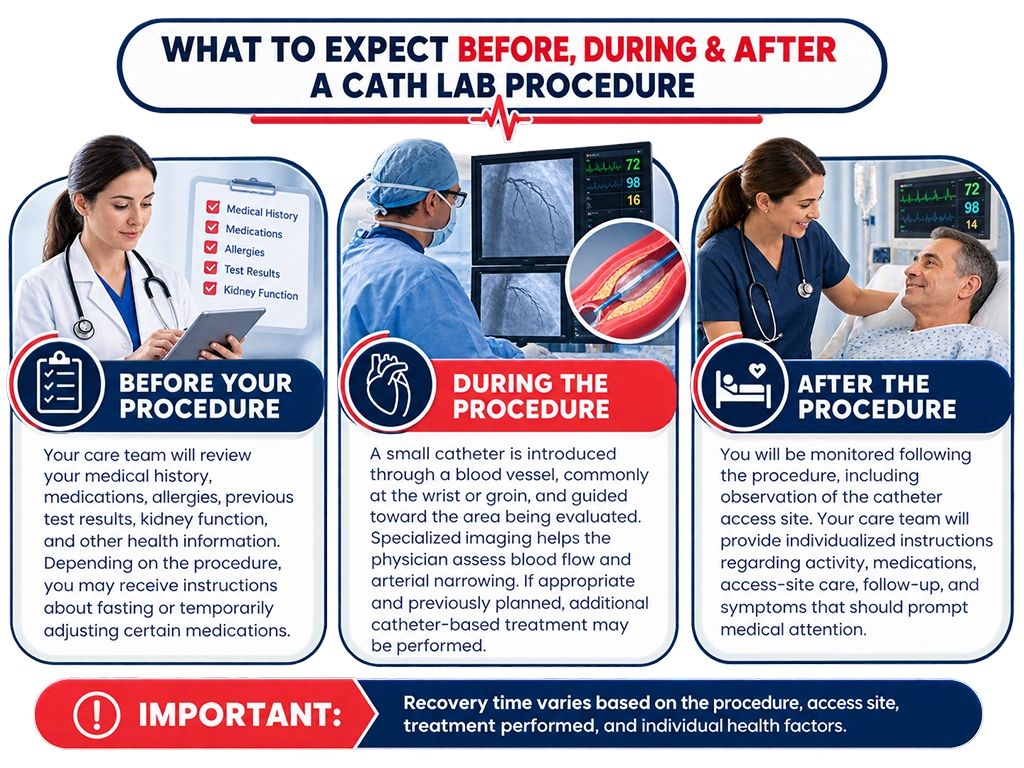
What to expect before, during, and after a cardiac catheterization or cath lab procedure
Meet Your Cath Lab Care Team

Experienced Providers for Catheter-Based Cardiovascular Care

FHVI’s cardiovascular physicians and clinical team work together to evaluate patients, perform appropriate catheter-based procedures, review findings, and coordinate follow-up based on each patient’s cardiovascular condition and treatment needs.

Dr. Asad Qamar, MD

Interventional Cardiologist

Claudio F. Manubens, MD

Interventional Cardiologist

David Edmund Ruggieri, MD

David Edmund Ruggieri, MD

Cardiologist

Jihad A. Mustapha, MD

Interventional Cardiologist

Syed Imran Ali, MD

Interventional Cardiologist

Jeveria Ali, DNP

Adult-Gerontology Acute Care NP

Tanya M. Johnson, ARNP

Family Nurse Practitioner

Cardiovascular Cath Lab Care Across Florida

Find an FHVI Cardiovascular Cath Lab Location

FHVI provides cardiovascular cath lab evaluation and selected catheter-based procedures at designated Florida locations. Procedure and provider availability may vary, so our scheduling team can help connect you with the appropriate location for your care needs.

Request Your Appointment

Complete the form below with your preferred cardiologist, location, and reason for visit. An FHVI team member will contact you to confirm availability and next steps.


    0/1000

    By submitting this form, you agree to our Privacy Policy. This form is for non-urgent inquiries only. For medical emergencies, please call 911.

    Why Choose FHVI

    Trusted Cardiovascular Care Since 1997

    Since 1997, Florida Heart & Vascular Institute has provided physician-led cardiovascular care with a focus on clinical expertise, advanced technology, clear communication, and individualized treatment. Our team works to make every step of the patient journey—from evaluation and diagnosis to treatment and follow-up—more coordinated and understandable.

    Serving Patients Since 1997

    Decades of cardiovascular care experience have shaped a patient-first approach focused on quality, continuity, and trust.

    Physician-Led Cardiovascular Care

    Our physicians stay closely involved in evaluation, treatment planning, and follow-up.

    Advanced Diagnostic Technology

    Modern cardiac and vascular testing supports accurate evaluation and informed care decisions.

    Personalized Treatment Plans

    Care recommendations are based on each patient’s symptoms, medical history, diagnostic findings, and individual needs.

    Minimally Invasive Care Options

    When appropriate, FHVI offers catheter-based and other minimally invasive treatment options for selected cardiovascular conditions.

    Coordinated Care Across Florida

    Multiple FHVI locations help patients access cardiovascular evaluation, testing, treatment, and follow-up closer to home.

    Frequently Asked Questions

    Cardiac catheterization is a minimally invasive procedure that uses a thin catheter and specialized imaging to evaluate blood flow through the coronary arteries and identify narrowing or blockages.

    Your cardiologist may recommend cardiac catheterization if symptoms or previous testing suggest possible coronary artery disease, reduced blood flow, or another condition requiring more detailed evaluation.

    Coronary angiography is commonly performed during cardiac catheterization. Contrast material is used to create images of the coronary arteries so the cardiologist can identify narrowing or blockages.

    In selected patients, angioplasty or stent placement may be performed during the same procedural encounter when clinically appropriate. Whether treatment is performed depends on the findings, clinical situation, and treatment plan.

    Coronary angioplasty is a catheter-based procedure that uses a small balloon to open a narrowed or blocked coronary artery. A stent may also be placed to help maintain blood flow.

    A coronary stent is a small mesh-like device placed within a narrowed artery to help keep it open after angioplasty.

    Peripheral angioplasty is a catheter-based procedure used to treat selected narrowed or blocked arteries outside the heart, commonly in the legs.

    Atherectomy is a specialized catheter-based technique used in selected patients to remove or reduce plaque within a narrowed artery.

    Local anesthesia and medications for comfort may be used during the procedure. Patients may experience pressure or other sensations, and the care team will explain what to expect before the procedure.

    Procedure time varies depending on whether the catheterization is diagnostic only or whether additional treatment is performed. Your care team will provide a more specific estimate based on the planned procedure.

    Recovery varies based on the procedure, vascular access site, treatment performed, and overall health. Your care team will provide individualized instructions about activity, medications, access-site care, and follow-up.

    Potential risks include bleeding or bruising, contrast reaction, kidney stress, blood vessel injury, abnormal heart rhythms, and uncommon but serious complications such as heart attack or stroke.

    Referral and authorization requirements vary by insurance plan and clinical situation. Contact FHVI or your insurance provider to confirm your specific requirements.

    FHVI accepts Medicare, Medicaid, and many major commercial insurance plans. Coverage and authorization requirements vary by plan and procedure, so benefits should be verified before treatment.