
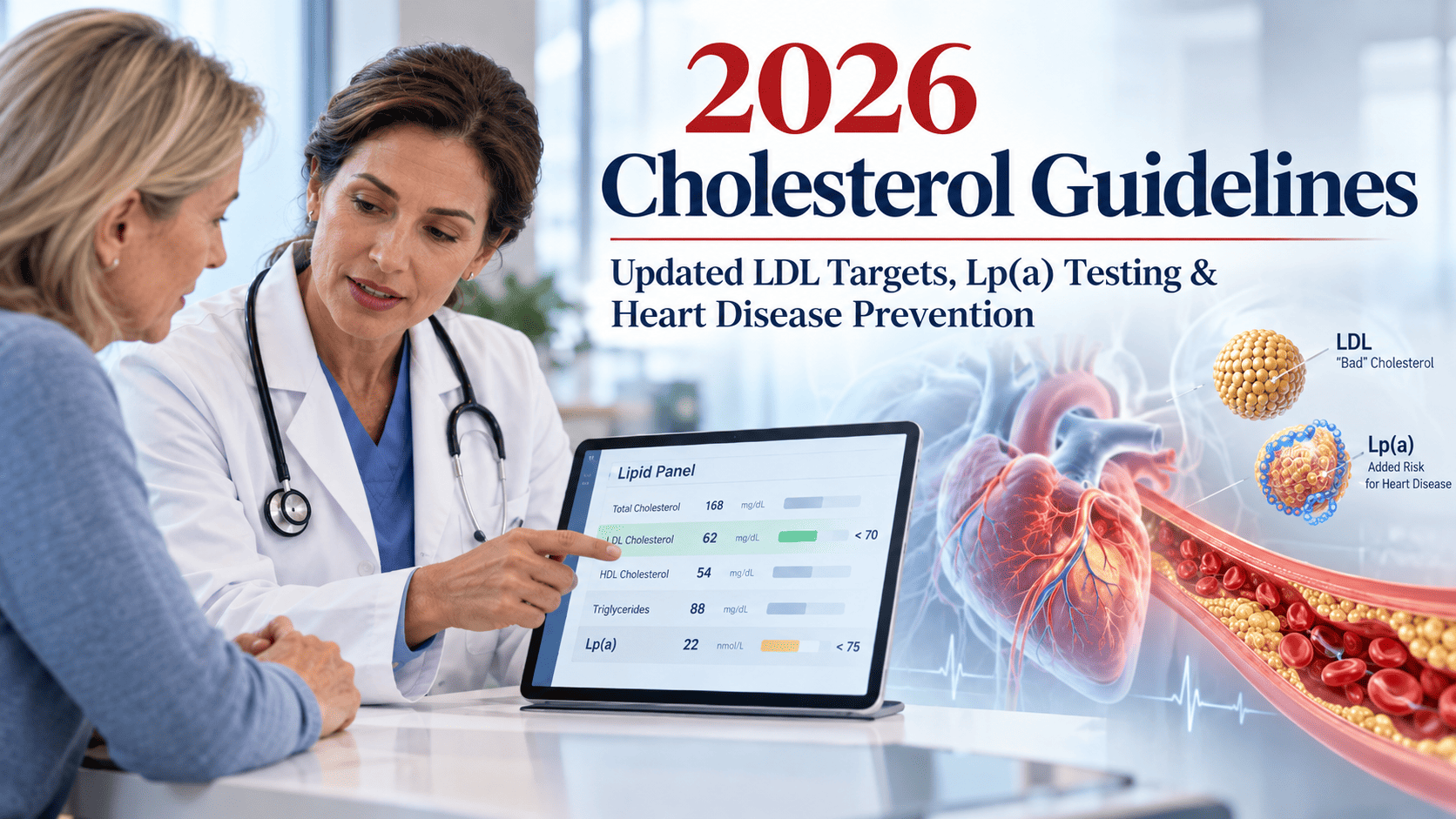
2026 Cholesterol Guidelines: What Patients Need to Know
The 2026 Cholesterol Guidelines, released by the American College of Cardiology (ACC) and American Heart Association (AHA) on March 13, 2026, introduce important changes to cholesterol management, LDL targets, and cardiovascular risk assessment. These updates emphasize earlier prevention and personalized care to support long-term heart health.
What's New in the 2026 Cholesterol Guidelines?
The new cholesterol guidelines 2026 replace the previous 2018 recommendations and introduce a more individualized approach to managing cholesterol and reducing cardiovascular risk.
According to the official ACC/AHA 2026 Guideline on the Management of Dyslipidemia, major updates include:
Earlier prevention: Identifying and addressing cardiovascular risk factors before heart disease develops.
Updated LDL cholesterol targets: Setting cholesterol goals based on each patient’s risk rather than using one target for everyone.
Lp(a) testing: Recommending at least one lipoprotein(a) measurement during adulthood.
Improved risk assessment: Using the PREVENT-ASCVD equations to estimate cardiovascular risk.
Personalized treatment: Considering lifestyle changes, medical history, and appropriate cholesterol-lowering therapies.
These recommendations help healthcare providers make informed decisions based on each patient’s overall cardiovascular health.
Patients concerned about cholesterol levels can consult the cardiovascular specialists at Florida Heart & Vascular Institute for an individualized evaluation.
Updated LDL Cholesterol Targets for 2026
Low-density lipoprotein (LDL), often called “bad cholesterol,” can contribute to plaque buildup inside arteries.
Over time, this buildup can restrict blood flow and increase the risk of heart attack, stroke, and other cardiovascular complications.
One significant update in the 2026 guidelines is the return of specific LDL cholesterol treatment goals.
Recommended LDL Goals by Cardiovascular Risk
| Cardiovascular Risk Category | LDL Cholesterol Goal |
|---|---|
| Borderline or intermediate risk | Below 100 mg/dL |
| High risk | Below 70 mg/dL |
| Established ASCVD with very high risk | Below 55 mg/dL |
These goals apply in the relevant guideline treatment settings. They are not universal targets for every patient.
For example, someone with a history of cardiovascular disease may need more intensive cholesterol management than someone without established heart disease.
Your provider may consider your age, cholesterol results, diabetes, blood pressure, smoking history, family history, and existing cardiovascular conditions.
Understanding conditions such as cardiovascular disease can help patients recognize why cholesterol management is important.
Important: Patients should not change or discontinue cholesterol medications without consulting their healthcare provider.
Why Lp(a) Testing Matters
One of the most important changes in the updated guidelines involves lipoprotein(a), commonly called Lp(a).
Lp(a) is a cholesterol-carrying particle in the blood that is largely determined by genetics.
Unlike ordinary LDL cholesterol, Lp(a) levels are not significantly changed by diet or exercise.
Elevated Lp(a) can increase the risk of cardiovascular disease, including heart attack, stroke, and aortic valve disease.
Who Should Get an Lp(a) Test?
The 2026 ACC/AHA guidelines recommend measuring Lp(a) at least once during adulthood.
Testing can be especially informative for people with:
A family history of premature heart disease.
A personal history of cardiovascular problems.
High cholesterol despite healthy lifestyle habits.
Unexplained cardiovascular risk.
Because Lp(a) is largely inherited, repeated testing is generally unnecessary unless a clinician identifies a specific reason.
An elevated result does not automatically mean someone will develop heart disease. Instead, it helps healthcare providers better understand overall risk and determine whether additional preventive measures may be appropriate.
Patients can explore FHVI’s patient resources to learn more about preparing for cardiovascular care.
Cardiovascular Risk Assessment and Prevention
The updated guidelines emphasize assessing a patient’s overall risk rather than focusing only on cholesterol numbers.
Understanding the PREVENT-ASCVD Calculator
The PREVENT-ASCVD equations help healthcare professionals estimate the likelihood of developing atherosclerotic cardiovascular disease.
For primary prevention, the guidelines recommend these equations for risk assessment in adults aged 30–79 without established ASCVD.
The calculator considers several factors, including:
Age and sex.
Cholesterol levels.
Blood pressure.
Diabetes status.
Smoking history.
Kidney function.
These estimates help clinicians discuss whether lifestyle changes, cholesterol-lowering medications, or additional evaluation may be beneficial.
The American College of Cardiology’s summary of the 2026 guideline also highlights the importance of personalized risk assessment.
FHVI provides various cardiovascular services to support the evaluation and management of heart-related conditions.
When Is Coronary Artery Calcium Scoring Considered?
Coronary artery calcium (CAC) scoring is a specialized CT scan that detects calcium deposits in the arteries supplying blood to the heart.
These deposits can indicate coronary plaque buildup. The guidelines support selective CAC scoring for certain adults when their cardiovascular risk is uncertain and additional information could influence treatment decisions.
It may be particularly useful for eligible adults with borderline or intermediate estimated cardiovascular risk. However, CAC scans are not necessary for everyone. Patients can learn about FHVI’s cardiac imaging services and discuss which diagnostic tests may be appropriate for their circumstances.
Lifestyle Changes for Heart Disease Prevention
Although the new guidelines introduce updated cholesterol targets and testing recommendations, healthy lifestyle habits remain essential.
1. Follow a Heart-Healthy Diet
Choose vegetables, fruits, whole grains, beans, nuts, and foods containing unsaturated fats. Limit saturated fats, trans fats, and highly processed foods.
2. Stay Physically Active
Regular physical activity supports cardiovascular health, blood pressure management, and healthy cholesterol levels. Adults should generally aim for at least 150 minutes of moderate-intensity aerobic activity weekly, when medically appropriate.
3. Avoid Smoking
Smoking damages blood vessels and increases cardiovascular risk. Quitting smoking is one of the most beneficial steps people can take for long-term heart health.
4. Manage Existing Conditions
Conditions such as diabetes, high blood pressure, and kidney disease can increase cardiovascular risk. Regular medical follow-up and appropriate treatment are important components of prevention.
5. Follow Your Cholesterol Treatment Plan
Some patients may need cholesterol-lowering medications alongside lifestyle changes. Treatment decisions depend on individual risk factors, medical history, medication tolerance, and clinician recommendations. For patients with established coronary artery disease, specialized care such as interventional cardiology may be relevant when clinically indicated.
Protect Your Heart With Florida Heart & Vascular Institute
The 2026 Cholesterol Guidelines reinforce a simple message: heart disease prevention should begin early and be tailored to each patient’s needs. Understanding your LDL cholesterol, knowing whether Lp(a) testing is appropriate, and discussing your cardiovascular risk can help you make informed decisions about your health.
At Florida Heart & Vascular Institute, our cardiovascular care team focuses on evaluating heart-related conditions and helping patients understand their care options. Whether you are concerned about high cholesterol, have a family history of heart disease, or need an evaluation of existing cardiovascular risk factors, speaking with a qualified healthcare professional is an important first step.
Explore our Florida cardiology locations to find convenient care.
Take the next step toward better heart health.
Book an appointment with FHVI or contact our team to discuss your cardiovascular health concerns.
Medical Disclaimer: This article is for general educational purposes only and does not replace professional medical advice, diagnosis, or treatment. Consult a qualified healthcare professional regarding your individual cholesterol results and cardiovascular risk.