
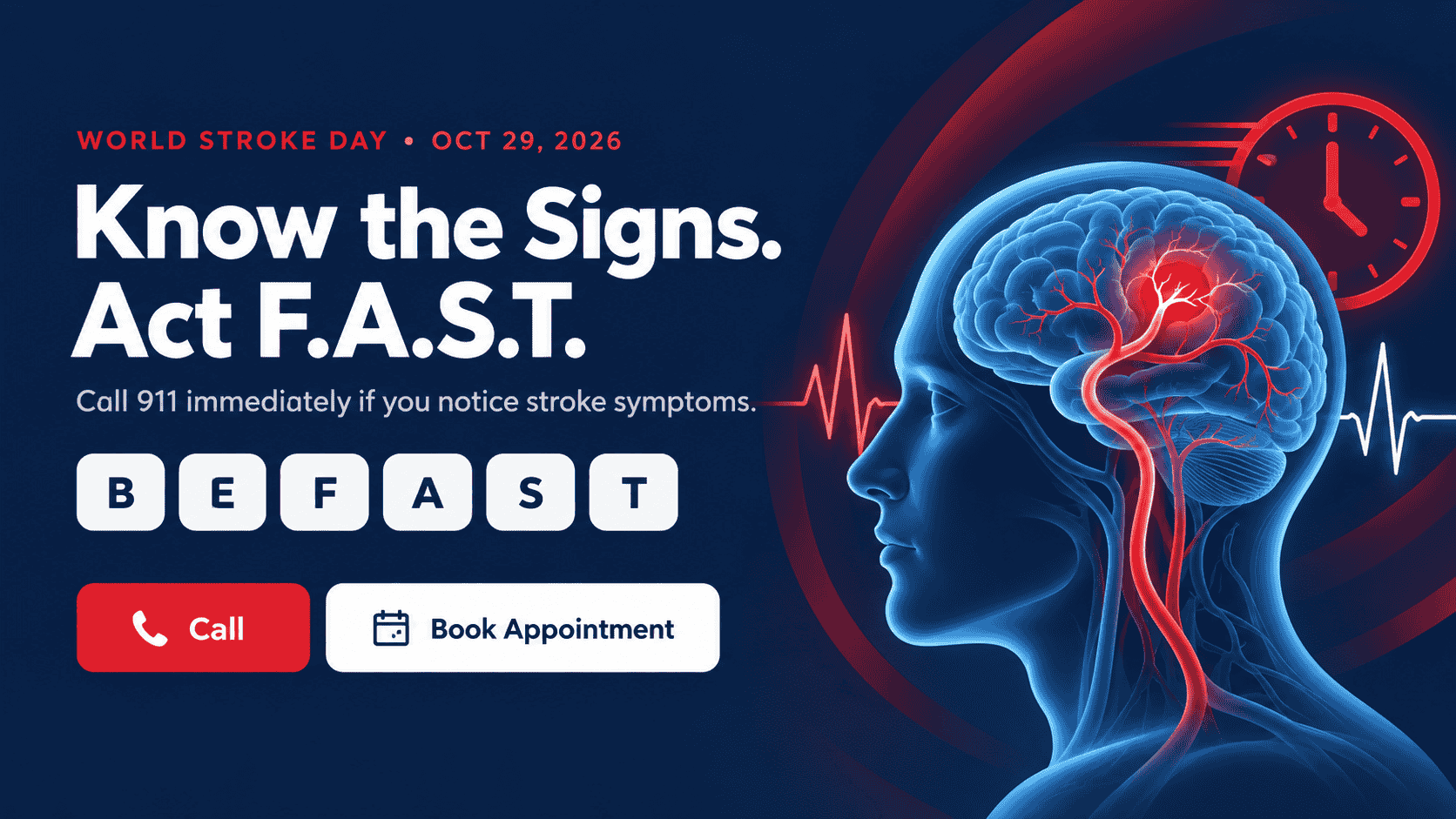
HEART & VASCULAR HEALTH • OCTOBER 29, 2026
World Stroke Day 2026: Early Stroke Warning Signs You Should Never Ignore
On World Stroke Day 2026, Florida Heart & Vascular Institute (FHVI) is helping families recognize stroke warning signs and act without delay. Knowing what a stroke looks like and what to do next can help someone reach emergency care as quickly as possible.
Why World Stroke Day 2026 Matters
World Stroke Day, observed on October 29, reminds us that recognizing symptoms quickly matters. Stroke can affect adults of many ages, including people who have never had noticeable heart problems.
The World Stroke Organization encourages communities to learn stroke signs and act fast. Sharing these signs may help others respond quickly.
What Is a Stroke? Ischemic, Hemorrhagic, and TIA
A stroke happens when part of the brain does not get the blood it needs, or when bleeding occurs in or around the brain. Without proper blood flow, brain cells can be injured. Doctors must identify the stroke type before treatment.
Ischemic Stroke
An ischemic stroke happens when a clot or other blockage interrupts blood flow to part of the brain. A clot may form in an artery or travel from another part of the body, including the heart.
Hemorrhagic Stroke
A hemorrhagic stroke happens when a blood vessel breaks and causes bleeding in or around the brain. This is one reason you should not give aspirin to someone with suspected stroke symptoms unless emergency professionals tell you to.
Transient Ischemic Attack (TIA)
A TIA, sometimes called a “mini-stroke,” is a temporary blockage of blood flow to the brain. Symptoms may last only a short time and then disappear. A TIA is still a medical emergency and may warn of a future stroke. Call 911 immediately.
Recognize Stroke Symptoms With B.E. F.A.S.T.
The American Stroke Association uses B.E. F.A.S.T. to help people remember common stroke warning signs. These symptoms often start suddenly. You do not need to see every sign before calling for help.
Balance
Sudden loss of balance, dizziness, or trouble walking.
Eyes
Sudden blurred or double vision, or loss of sight in one or both eyes.
Face
One side of the face droops or feels numb. A smile may look uneven.
Arms
Sudden weakness or numbness, often on one side. One arm may drift down.
Speech
Slurred speech, difficulty speaking, or trouble understanding words.
Time = Call 911
Call 911 immediately. Do not wait to see if symptoms improve.
These signs are not a diagnosis. Emergency teams can assess and treat the person.
Early Stroke Warning Signs in Women and Men
Signs of stroke in women and men often look alike, especially facial drooping, arm weakness, and speech changes. But some symptoms may be less obvious and can be mistaken for a different problem.
Other possible warning signs include sudden confusion, a severe headache without a clear cause, sudden numbness or weakness in a leg, new vision changes, or unexplained trouble with coordination. Some people, including women, may experience nausea or vomiting along with other stroke symptoms.
Do not assume a person is safe because they are young, can still talk, or feel better after a few minutes. Sudden neurological symptoms deserve an immediate 911 call.
What Should You Do if Someone Has a Stroke?
Call 911 immediately, even if symptoms go away. Do not drive yourself, and do not wait to book an appointment. While emergency help is on the way:
- Call 911 first. Tell the dispatcher you suspect a stroke. Follow their instructions.
- Note the time. Remember when symptoms began or when the person was last known to be well. Tell emergency responders.
- Stay with the person. Help them remain in a safe, comfortable position. Watch for changes in their condition.
- Do not give food, drinks, or aspirin unless the 911 dispatcher or emergency medical team tells you to. Swallowing may be difficult, and aspirin may be unsafe in a bleeding stroke.
- Stay calm and keep listening. Reassure the person, make space for responders, and follow dispatch instructions. If the person becomes unresponsive, tell the dispatcher immediately.
Emergency medical services can begin evaluating the situation and take the person to an appropriate hospital. An ordinary office visit is not the right first step for suspected stroke.
Common Stroke Risk Factors
Some stroke risk factors can be improved with ongoing care, while others cannot be changed. Discuss your risk with a healthcare professional.
- High blood pressure: Can damage blood vessels over time and is a major stroke risk factor.
- Diabetes and high cholesterol: Can contribute to blood vessel damage and artery disease.
- Smoking: Harms blood vessels and raises the risk of cardiovascular problems.
- Heart conditions: Atrial fibrillation (AFib), an irregular heart rhythm, can allow clots to form and travel to the brain.
- Carotid or vascular disease: Narrowed arteries may interfere with healthy blood flow.
- Age and family history: Risk may increase with age, and inherited or family factors can matter.
Learn more about cardiovascular disease evaluation, heart rhythm care and AFib, and vascular specialist services.
How to Reduce Your Stroke Risk
Not every stroke can be prevented, but healthy habits and appropriate medical care can lower risk. Ask your clinician what is right for you.
- Know your blood pressure. Check it as advised and follow your treatment plan if it is high.
- Manage cholesterol and diabetes. Ask about testing, medicines, nutrition, and follow-up.
- Stop smoking. Ask your care team for support if quitting feels difficult.
- Move regularly and eat well. Choose activities suited to your health and favor vegetables, fruit, whole grains, and less sodium.
- Discuss AFib and carotid disease. Your clinician can decide whether heart rhythm testing or vascular screening is appropriate based on your history and symptoms.
- Take medications as prescribed. Do not start, stop, or change blood thinners or other treatments without medical guidance.
If a heart rhythm concern is suspected, a clinician may recommend cardiac monitoring. Other options, when clinically appropriate, may include cardiac imaging or cardiac stress testing. These tests do not replace emergency stroke care.
How FHVI Supports Cardiovascular Health
Since 1997, Florida Heart & Vascular Institute has provided physician-led cardiovascular care in Florida. FHVI focuses on heart and vascular evaluation, diagnostic testing, chronic condition management, and appropriate follow-up—not emergency stroke treatment.
Patients can explore FHVI's cardiology and vascular services, meet FHVI physicians and providers, or review information about interventional cardiology, the cardiac catheterization lab, and cardiovascular surgery. Not every patient needs these procedures.
For a non-emergency prevention visit, find an FHVI location near you, including Ocala (SW 62nd Court), Ocala (SW 17th St), Ocala (Lake Weir Ave), Port St. John, Lehigh Acres, Englewood, Punta Gorda, and Lake City. Services and providers vary by office.
FAQs About Stroke Warning Signs
What are the first warning signs of a stroke?
Warning signs often start suddenly. Watch for loss of balance, vision changes, facial drooping, arm weakness, or trouble speaking. Call 911 right away if you notice any of these signs.
Can stroke symptoms go away on their own?
Yes. Symptoms that disappear could be a transient ischemic attack (TIA), sometimes called a mini-stroke. It is still an emergency. Call 911 even if the person feels better.
Are stroke warning signs different in women?
Women and men can have the same common signs. Some people may also have sudden confusion, headache, nausea, or vomiting. Do not dismiss sudden or unusual symptoms, especially alongside other stroke signs.
Should I give aspirin to someone having a stroke?
No, not unless emergency dispatchers or medical professionals specifically tell you to. Some strokes involve bleeding, and aspirin could make that bleeding worse. Call 911 first.
How is a stroke different from a heart attack?
A stroke affects blood flow in the brain or involves bleeding in the brain. A heart attack affects blood flow to the heart muscle. Both can be emergencies requiring immediate medical attention.
Can I schedule an FHVI appointment for stroke prevention?
Yes. FHVI can help assess cardiovascular risk and provide appropriate heart and vascular follow-up. If stroke symptoms are happening now, call 911 instead of making an office appointment.
World Stroke Day 2026: Know the Signs, Act Without Delay
If you think someone is having a stroke, call 911 immediately even if symptoms improve. Do not drive yourself and do not wait for an FHVI appointment.
On World Stroke Day 2026, take time to learn B.E. F.A.S.T. and share it with someone you care about. Knowing your blood pressure, cholesterol, heart rhythm, and vascular risk can also support a healthier future.
For prevention, cardiovascular risk evaluation, or non-emergency follow-up only, you can request a visit with FHVI. If warning signs start at any time, call 911 instead.
Medical disclaimer: This article is for general education and is not a substitute for professional medical advice, diagnosis, or treatment. For any suspected stroke, call 911 immediately.